ISLAMABAD (Sapeher Times) Long March Begins; Government-Opposition Talks Fail


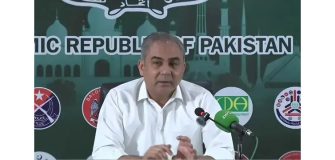
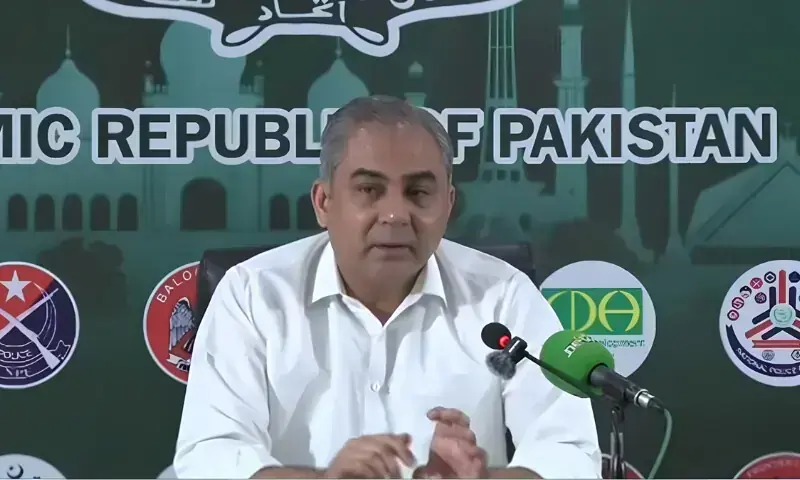
ISLAMABAD (Sapeher Times) Interior Minister Mohsin Naqvi has accused Khyber Pakhtunkhwa Chief Minister Sohail Afridi of attempting to sabotage the negotiations between the Pakistan Tehreek-e-Insaf (PTI) and the federal government. The PTI and the federal government—led by the Pakistan Muslim League-N (PML-N)—held two rounds of talks on Friday and Saturday to avert the PTI’s proposed long march to Islamabad; however, the negotiations ended without a final agreement because of persistent differences over key issues. Points of contention included access to the imprisoned PTI founder, Imran Khan, and the issue of military operations in terrorism-affected areas of Khyber Pakhtunkhwa. Addressing a press conference, Mohsin Naqvi said the talks had settled 99 percent of the points in the proposed agreement. He explained that a draft agreement had been prepared, and he had taken a copy to show President Asif Ali Zardari. According to the Interior Minister, upon his return after showing the draft to the President, he discovered that the Khyber Pakhtunkhwa Chief Minister had made several amendments to it. Naqvi alleged that the Chief Minister of Khyber Pakhtunkhwa had unfortunately attempted to sabotage the negotiations. He noted that four drafts of the agreement were prepared and amended during Saturday’s talks, with consensus reached on most points. He added that the government had made it clear to the opposition delegation that the matter under discussion was not political in nature but related to terrorism. Mohsin Naqvi’s statement came after Chief Minister Sohail Afridi shared the draft of the seven-point demands—presented to the negotiation committee—on X (formerly Twitter). In his statement on X, Naqvi said that the Khyber Pakhtunkhwa government had agreed to sign a written agreement and submit an implementation plan within 72 hours; however, during negotiations held last night, the government backed away from these assurances. Khyber Pakhtunkhwa Chief Minister Sohail Afridi has announced the formal commencement of the first phase of the long march. A second round of talks between the government and the opposition—held just hours before the long march scheduled for October 4—concluded without a final agreement despite hours of continuous dialogue, and the deadlock between the two sides persists. This crucial meeting, which began on Saturday evening at Parliament House under the chairmanship of National Assembly Speaker Ayaz Sadiq, continued until past 2:00 AM (into Sunday morning); yet, despite all efforts, the parties failed to reach a consensus. Earlier, reports had circulated suggesting that both sides had finalized and signed an initial draft of the agreement.
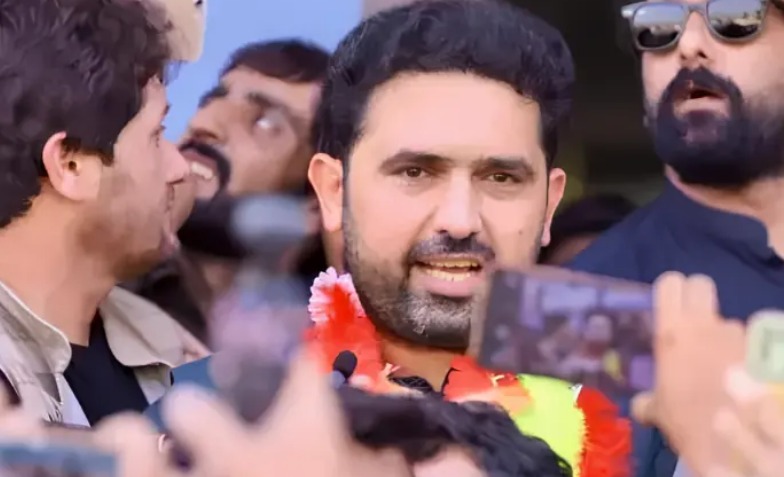
Meanwhile, clarifying the government’s stance, federal government leader Rana Sanaullah stated that the PTI’s long march would under no circumstances be permitted to enter the limits of Islamabad. In a statement issued on the social media platform ‘X’, he said, “We will launch the first phase of the long march from Gandi Chowk, Lakki Marwat.” Outlining the roadmap for the march, it was stated that on October 4 at 1:00 PM, proud Pakistanis from the districts of Tank, Dera Ismail Khan, South Waziristan, North Waziristan, Bannu, and Lakki Marwat would join the march from Gandi Chowk, Lakki Marwat, with the caravan halting for the night near Karak. The Chief Minister of Khyber Pakhtunkhwa announced that the people of Karak would join the procession at 12:00 PM on October 5; following their departure at 12:30 PM, the night would be spent near Kohat. On October 6, people from the districts of Kohat, Hangu, Kurram, and Orakzai would join, and the caravan would camp near Matani, Peshawar. According to Sohail Afridi, on October 7, residents from the Khyber district and various constituencies of Peshawar would welcome the marchers at Budh Bher—specifically at the Motorway Toll Plaza and the Kohat Road bridge—before the group spent the night at the Charsadda Interchange. Finally, on October 8, people from across Khyber Pakhtunkhwa would gather at Khairabad to spend the night, at which point the final future course of action would be announced. Reacting to this political development, Barrister Gohar, Chairman of Pakistan Tehreek-e-Insaf (PTI), clarified that the party’s long march would proceed according to its established schedule. He emphasized that no actions should be taken under the guise of the long march that might incite hatred, division, or tension among the people of Khyber Pakhtunkhwa, or compromise the province’s mandate, autonomy, and powers. Meanwhile, the Federal Interior Minister stated that a sound agreement between the government and the opposition had nearly been finalized, with the parties agreeing on 99 percent of the points; however, Khyber Pakhtunkhwa Chief Minister Sohail Afridi sabotaged the negotiations at the final stage. According to him, the core issue in the talks was not political but rather related to terrorism and the provincial government’s role in combating it. Following the negotiations, a draft of the written agreement was prepared four times, undergoing revisions on each occasion. He noted that a point was reached where everyone agreed on 99 percent of the terms, and a solid agreement had effectively been concluded.In light of the security situation, the proposed agreement included provisions for reviewing the Police Act 2026, preventing terrorists from operating freely or securing safe havens within the province, and unequivocally condemning terrorist groups such as the Tehreek-e-Taliban Pakistan (TTP) and Tehreek-e-Taliban Afghanistan (TAA). The agreement also endorsed the national policy regarding Afghan refugees—addressing their repatriation and the dismantling of Afghan camps in Khyber Pakhtunkhwa—while calling for a refusal to engage with the interim Afghan government, the provision of adequate funds for counter-terrorism operations and the police, and the assumption of full provincial responsibility for counter-terrorism measures. Furthermore, emphasis was placed on strengthening cooperation between the provincial government and the armed forces, as well as implementing provincial counter-terrorism decisions and the National Action Plan in the former FATA and merged districts. Mohsin Naqvi stated that security matters should not be politicized when the province is facing a state of war. His statement came a day after the second round of talks between the government and the opposition concluded without a breakthrough. Refusing to call off the October 4 long march, the opposition demanded that its representatives first be granted permission to meet the incarcerated former Prime Minister and PTI founder, Imran Khan. Although the negotiations held in National Assembly Speaker Ayaz Sadiq’s chamber lasted over eight hours, no agreement was reached; the government insisted that the opposition end the protest first, while the opposition demanded a meeting with Imran Khan that would include opposition leaders and Khyber Pakhtunkhwa Chief Minister Sohail Afridi. Meanwhile, the first phase of the march began in Lakki Marwat and will proceed through the southern districts to reach Peshawar. This protest is taking place against the backdrop of mounting security concerns in Khyber Pakhtunkhwa, where security forces are continuing operations against terrorists. Pakistan Tehreek-e-Insaf (PTI) leader Salman Akram Raja has attributed the failure of negotiations between the government and the opposition to disagreements regarding the proposed framework for counter-terrorism measures in Khyber Pakhtunkhwa. He stated that the federal government wanted the provincial government to accept responsibility for measures initiated unilaterally by the Centre. Following the talks, Salman Akram Raja stated in a post on the social media platform X that the PTI-TTAP negotiating team maintained that counter-terrorism measures in Khyber Pakhtunkhwa should be based on mutual consensus between the federal and provincial governments, and that political parties represented in the provincial assembly should also be consulted and their support secured. According to Salman Akram Raja, this stance was unacceptable to the government’s negotiating team; the government team insisted that the provincial government must accept responsibility for measures unilaterally initiated by the federal government. He added that the PTI-TTAP team adheres to a zero-tolerance policy regarding terrorism and is committed to eradicating it; however, they oppose measures that result in loss of life and social upheaval, including civilian casualties and internal displacement. Salman Akram Raja stated that counter-terrorism policies must garner the support of the local population and be formulated based on ground-level information and intelligence. He urged that the recommendations of the jirga held at the Khyber Pakhtunkhwa Assembly—attended by political and tribal leaders from across the province, including the merged districts—be taken into account. This development comes at a time when the second round of talks between the government and the opposition has concluded without an agreement. The negotiations, held the previous day in the chamber of National Assembly Speaker Ayaz Sadiq, lasted over eight hours and aimed to resolve differences regarding the PTI’s planned long march on October 4, as well as other political and security-related issues. The government and the opposition held conflicting views regarding the reasons for the talks’ failure. The issue of access to incarcerated PTI founder Imran Khan was among the unresolved matters; opposition leaders demanded a meeting with him, while the government remained firm on its stance regarding the proposed long march. Federal Minister for Information and Broadcasting Attaullah Tarar rejected Salman Akram Raja’s position, stating that the federal government had already proposed adopting a joint strategy with the Khyber Pakhtunkhwa government to combat terrorism. Responding to Salman Akram Raja’s statement on X, Tarar questioned the Khyber Pakhtunkhwa government’s participation in federal and provincial apex committee meetings on terrorism and its implementation of the National Action Plan. He also questioned the provincial government’s stance regarding the Afghan Taliban administration and cross-border attacks. He also criticized the provincial government for its alleged lack of cooperation regarding measures against terrorism. He maintained that the federal government is ready to cooperate and undertake joint actions with the provincial government to eliminate terrorism; however, the provincial government must also fulfill its responsibilities in this regard.He also questioned the provincial government’s stance regarding the Afghan Taliban administration and cross-border attacks, criticizing the allegedly inadequate support provided to security forces and police personnel fighting terrorism in the province. Attaullah Tarar stated that the PTI was raising the issue of consultation because it was facing political pressure; he further accused the Khyber Pakhtunkhwa government of failing to implement measures mandated by the National Action Plan. PPP Senator Sherry Rehman noted that negotiations collapsed when the Khyber Pakhtunkhwa government refused to sign a draft agreement with the federal government concerning counter-terrorism cooperation. Four different versions of the draft agreement had been prepared to incorporate changes proposed by the PTI, to involve the provincial government in counter-terrorism decision-making. Sherry Rehman stated that representatives of the Khyber Pakhtunkhwa government failed to participate in the talks despite repeated requests, and she accused the provincial government of introducing new conditions during the final stage of negotiations. These talks had offered an opportunity to establish political trust and cooperation between the federal and provincial governments.
Rejecting the government’s position, Khyber Pakhtunkhwa government spokesperson Shafi Jan stated that while the negotiating committee had been granted full authority to resolve political matters, the provincial government’s ultimate authority rests with the Chief Minister; the provincial government’s policy cannot contradict the stance of PTI founder Imran Khan. He accused the federal government of attempting to target the PTI instead of focusing on eradicating terrorism. Demanding a shift in counter-terrorism policy, Shafi Jan stated that the province could not tolerate further civilian casualties or displacement. He asserted that decisions affecting Khyber Pakhtunkhwa should not be made without consulting the province. The deadlock in negotiations occurred while the PTI remained committed to its plan for a long march on October 4; the party had previously postponed its protest from September 27 to October 4 to facilitate continued talks with the government. Meanwhile, Prime Minister Shehbaz Sharif and PML-N President Nawaz Sharif met in Lahore on Sunday, holding detailed discussions on the country’s overall political situation and matters of international significance. Punjab Chief Minister Maryam Nawaz was also present at the meeting. Separately, Defense Minister Khawaja Asif alleged that the PTI leadership had been facilitating terrorism in Khyber Pakhtunkhwa, thereby exacerbating security challenges in the province. In a statement on a social media platform, he said the nation would hold the Khyber Pakhtunkhwa government accountable for the deaths of numerous civilians and military personnel resulting from acts of terrorism in the province. The Defense Minister claimed that the PTI founder had supported the resettlement of elements in Khyber Pakhtunkhwa that were sympathetic to terrorism, adding that Imran Khan’s speeches in the National Assembly and media records bear witness to this fact. He pointed out that after losing power at the Centre, every PTI Chief Minister attacked the federation. He described Islamabad as a symbol of national unity and the identity of 250 million Pakistanis. Khawaja Asif stated that martyrs sacrificed their lives while defending the homeland, and he referred to the military operation conducted last year that shattered the enemy’s arrogance. The Pakistani nation and its brave armed forces possess the resolve to confront any internal or external enemy.