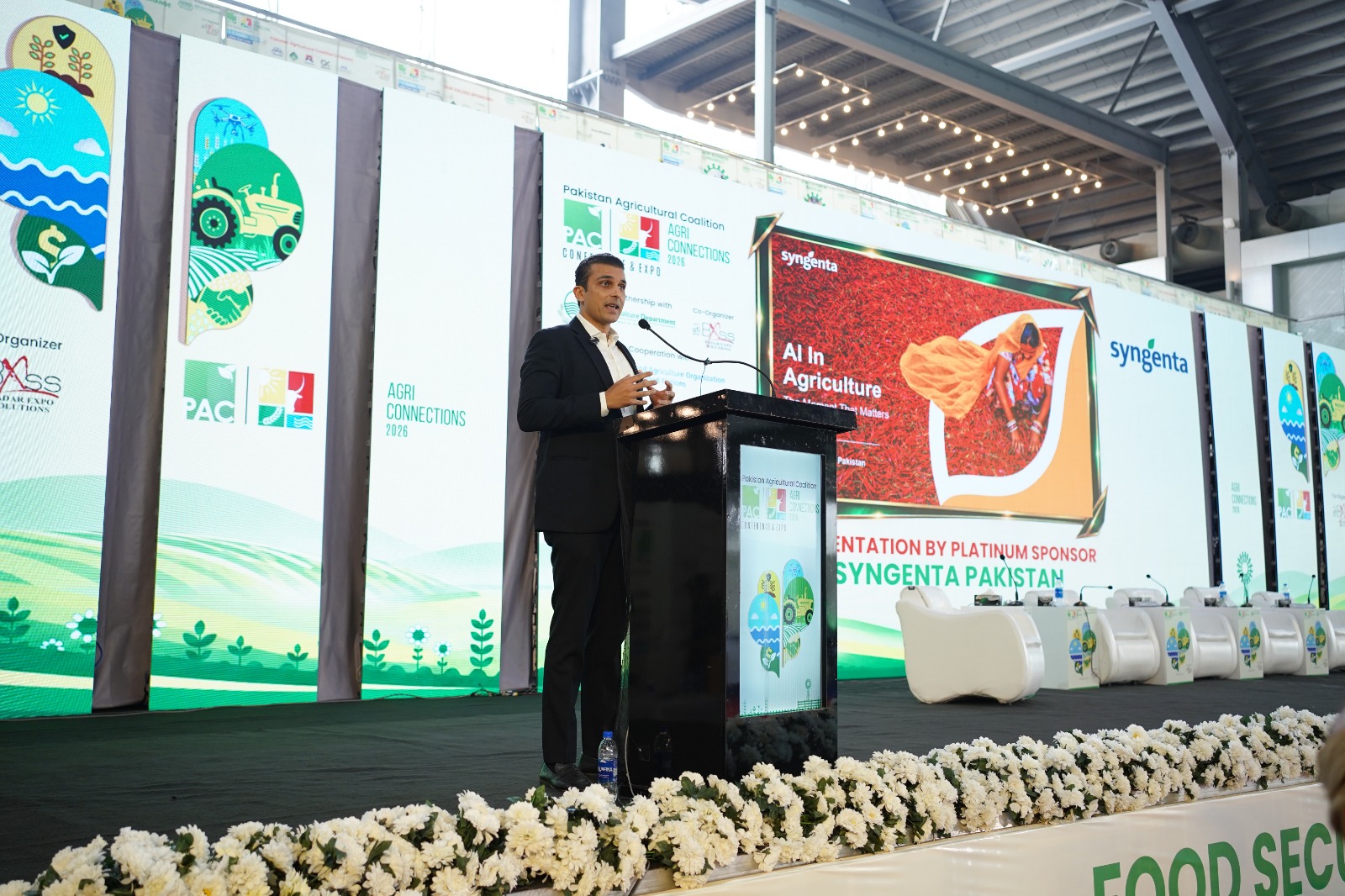
LAHORE (Sapeher Times) Pakistan turns to smarter irrigation to produce more with less water


LAHORE (Sapeher Times): Pakistan will need to produce more food from increasingly constrained water resources, placing greater importance on improving irrigation efficiency and raising the amount of agricultural output generated from every unit of water used. Speaking at the Pakistan Agriculture Coalition’s Agri-Connections 2026 conference in Lahore, Zeeshan Baig, Country General Manager, Syngenta Pakistan, said improving water productivity would be critical as agriculture faced growing pressure from population growth, declining water availability and climate-related stress.
Pakistan’s agricultural system remains heavily dependent on irrigation, while water availability has declined sharply over recent decades. Baig said these pressures meant the country could no longer rely simply on greater resource use to increase agricultural production.
Instead, he said, farmers needed access to practical tools and information that could help them use available resources more efficiently at the points where farm-level decisions were being made.
“Until these small things or small decisions are not solved, until we don’t empower farmers to make the right decisions, we will never be able to solve food security in Pakistan,” Baig said.
He pointed to laser land levelling as an example of how relatively simple interventions could simultaneously improve water efficiency and crop productivity.
In central Punjab, he said, laser leveling could reduce water use by around 20 to 30 percent while increasing crop yields by approximately 10 percent.
“These are all very, very small technology interventions. No AI, nothing, very basic ones. But the intervention happens when the decision has to be taken by the farmer,” he said.
Baig said the example demonstrated that improving agricultural productivity did not necessarily require greater consumption of scarce resources. Better land preparation, improved irrigation practices and more informed farm management could allow farmers to generate higher output while reducing avoidable water losses.
The issue is particularly significant for Punjab, which accounts for a major share of Pakistan’s agricultural and food production. Improvements in irrigation efficiency in the province could therefore have implications not only for individual farm productivity, but also for national food supplies.
Baig said the wider challenge was to ensure that farmers received the right information and practical support at the time decisions were being made in the field.
This could include better use of weather information, agronomic advisory, field conditions and crop requirements to help farmers manage water more efficiently as part of broader crop-management practices.
He stressed that technology should complement rather than replace farmers’ experience, with effective solutions designed around practical agricultural needs rather than technological sophistication alone.
For Pakistan, the shift towards smarter irrigation is therefore increasingly about water productivity rather than simply water consumption — producing more food from the same, or potentially smaller, volume of increasingly scarce water.
As agricultural demand continues to rise, improving efficiency at farm level could help protect crop output while reducing pressure on one of the country’s most constrained natural resources.