ISLAMABAD (Sapeher Times) Iran sends new ceasefire proposals to US through Pakistan

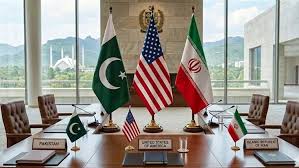
ISLAMABAD (Sapeher Times) Pakistan has conveyed to the US the revised proposal prepared by Iran to end the ongoing tension in the Middle East, while differences still persist in the ceasefire talks.
Pakistan is playing a key role as a central mediator and peacemaker in the recent war between the US and Iran.
Pakistan has acted as an effective bridge between the two rival countries due to the lack of direct diplomatic relations.
The important aspects of this dynamic diplomatic role of Pakistan are as follows,
1. Holding a historic ceasefire:
It was only as a result of the tireless efforts of Pakistan’s political and military leadership that a temporary ceasefire between the US and Iran was possible on April 8, 2026.
Islamabad talks: On April 11 and 12, Pakistan hosted US Vice President JD Vance and Iranian Parliament Speaker Mohammad Baqer Qalibaf, where lengthy direct and indirect talks took place.
2. Role of Field Marshal Asim Munir:
Pakistan’s military chief Field Marshal Asim Munir’s strong ties with US President Donald Trump have played a key role in this mediation. President Trump has also publicly praised the Pakistani leadership for this role.
Prime Minister Shehbaz Sharif and Foreign Minister Ishaq Dar:
They maintained constant contact with Iranian President Masoud Peshmerga and also included China, Saudi Arabia and other European countries in the framework of this peace process.
Emergency visit of Interior Minister Mohsin Naqvi:
In mid-May 2026, when the threat of a ceasefire broke out, Pakistani Interior Minister Mohsin Naqvi made an emergency visit to Tehran and met with the Iranian President and Speaker to prevent the diplomatic channel from being closed.
3. Transmission of messages and proposals;
In the current critical situation, Pakistan is the most reliable medium for exchanging proposals from both sides. Iran’s latest 14-point revised proposal has also been conveyed to the White House through Pakistan.
4. Pakistan’s interests and strategic constraints;
Pakistan is also determined to stop this war because: It wants to maintain peace on its long border with Iran. There is a serious fear that unrest in Iran will affect the security of Pakistani Balochistan.
The closure of the Strait of Hormuz has caused a severe economic and energy crisis for Pakistan and the whole world. Global recognition and challenges This role of Pakistan has been widely appreciated globally. In addition to high-ranking officials from Britain, Australia and New Zealand, members of the US Congress have also written letters to the Pakistani leadership praising this diplomatic insight.
However, in recent days, Pakistani mediation has come under severe pressure due to the strong demands and warlike statements of both countries because Pakistan is not in a position to impose its will on any party.
The Iranian Foreign Ministry has also confirmed that Tehran’s position has been conveyed to US officials through Pakistani mediation.
Iran has sent a revised (amended) 14-point peace draft and proposals to the United States through Pakistan’s mediation to end the ongoing tension and war in the Middle East. According to Iranian Foreign Ministry spokesman Esmail Baghai, these proposals have been sent as a detailed review and response to the 5-point conditions received from the United States last week.
Key points and demands of the Iranian proposals;
The revised draft submitted by Iran includes the following basic demands: Permanent end to the war: Iran has demanded a complete and permanent end to the war within 30 days instead of extending the temporary ceasefire.
Restoration of frozen assets:
All Iranian financial assets frozen in the United States should be restored immediately. End of sanctions and naval blockade: The US naval blockade on Iranian ports should be lifted and economic sanctions imposed on Iran should be lifted.
Control over the Strait of Hormuz:
Iran maintains that it will maintain its sovereignty and control over the strategically important Strait of Hormuz.
Postponement of nuclear talks:
Iran demands that talks on the nuclear program be held in the next phase after the lifting of sanctions and blockades.
Regional ceasefire:
Israeli and American military operations on all fronts, including Lebanon, should be immediately stopped.
US position and current situation;
Pakistani officials have conveyed this revised draft to the White House, but deep differences between the parties still persist:
US conditions:
The US had demanded that Iran transfer its stockpile of enriched uranium to the US and keep only one nuclear site operational. The US was not even willing to restore more than 25% of Iran’s frozen assets.
President Trump’s threat:
US President Donald Trump has warned Iran that “time is running out” and that Iran should immediately accept the US terms, describing the current ceasefire as “on life support”.
Pakistan’s role:
Pakistan’s Army Chief and Interior Minister Mohsin Naqvi are in constant contact with the leadership and diplomats of both countries to resolve the deadlock in the talks. However, sources say that due to the frequent changes in demands by both sides, there is very little time left for a final agreement.British news agency reported that Pakistan has shared Iran’s new proposals with the United States in a bid to pave the way for an end to the ongoing conflict in the Middle East.
Progress in the talks has been slow, with both sides constantly changing their positions. “We don’t have much time,” the Pakistani source said, while the process of narrowing the differences was also described as difficult.
Iranian Foreign Ministry spokesman Esmail Baghai confirmed that Tehran’s views had been “conveyed to the American side through a Pakistani mediator.”
Last week, US President Donald Trump said that the ceasefire with Iran, which was reached in early April, was in a “very fragile state” as Iran’s response showed that the two countries still had deep differences on several key issues.
The biggest obstacle in the talks is Iran’s nuclear program and its control of the Strait of Hormuz, where Iran has restricted shipping. The sea route is considered crucial for the transport of oil and liquefied natural gas around the world.
Iran has demanded an end to the fighting on all fronts in the region, including in Lebanon, where clashes between Israel and the Iranian-backed Hezbollah are ongoing. Tehran has made it clear that it will not negotiate its nuclear program before a “permanent ceasefire.”
Iran has also demanded compensation for war damages, an end to the US naval blockade, no guarantees against future attacks, and the restoration of Iranian oil sales.
Iranian spokesman Esmail Baghai said Tehran was prepared for any eventuality. He said it was fully capable of responding appropriately to any “minor mistake” by the opposing side.
It should be noted that on February 28, the US and Israel launched attacks on Iran, which were said to be aimed at dismantling Iran’s missile program. At the time of these attacks, talks between the US and Iran on their nuclear and ballistic missile programs were also underway. Iran responded by launching missile and drone attacks targeting US military bases and assets in the region. The war spread to Lebanon on March 2, when Hezbollah launched rocket and drone attacks on Israeli targets from southern Lebanon. The group said the attacks were in response to actions against Iran’s leadership. On March 4, Iran effectively blocked the Strait of Hormuz, a vital global oil shipping route. The move severely disrupted global energy supplies. On April 8, a 14-day ceasefire was declared between the United States and Iran, which was later extended with the mediation of Pakistan, while high-level talks in Islamabad on April 11 and 12 ended without an agreement. On April 13, the United States imposed a naval blockade on Iranian ports, aimed at restricting Iran’s economic activities. A second round of talks was scheduled for April 20 and 21 in Islamabad, but the US president canceled the delegation’s visit, saying the talks would be held by telephone, while Iranian officials also avoided attending the round. According to the report, diplomatic efforts continued alongside military operations during the war, but no progress has been made towards a final agreement so far.The ongoing war and tension in the Middle East have reached a very critical and thrilling point where the diplomatic deadlock has created a serious threat of the ceasefire breaking down and renewed attacks. The details of the current situation after the major airstrikes by the US and Israel on Iran in February 2026 and the temporary ceasefire in April are as follows:
1. Diplomatic deadlock and President Trump’s threats;
US President Donald Trump has described the current ceasefire as extremely weak (on life support). He has given a stern warning to Iran that “time is running out” and that if Iran does not surrender immediately on US terms, there will be nothing left of Iran.
New war preparations by Israel and the US:
According to the latest intelligence reports, there has been a long consultation between Israeli Prime Minister Benjamin Netanyahu and President Trump, after which the US and Israeli forces have activated emergency plans to bomb Iran again.
2. Strait of Hormuz Crisis and Naval Blockade:
Iran’s partial blockade and closure of the Strait of Hormuz has severely disrupted the supply of oil, petrochemicals, and industrial goods worldwide.
Several countries have experienced shortages of raw materials such as packaging ink.
Operation Freedom:
The United States has launched “Operation Freedom” to forcefully open the Strait of Hormuz and allow commercial ships to pass through without Iranian restrictions, while Iran has threatened to turn the Sea of Oman into a graveyard for ships if the US blockade is not lifted.
3. Horrific devastation on other fronts of the war;
: Israel continues to bomb Lebanon, where the number of Lebanese civilians martyred since the beginning of the war has exceeded 3,000. Gaza aid flotilla: The Israeli navy has intercepted and seized the ships of the international aid flotilla trying to break the blockade of Gaza.
4. Drone attacks in the Gulf countries and a new conflict;
Attack on the United Arab Emirates (UAE): Recently, a mysterious drone attack occurred on the exterior of the UAE’s Barakah nuclear power plant, causing a fire there. Although radiation levels are normal, the incident has pushed crude oil prices to a two-week high in the global market.
Saudi Arabia’s action:
Saudi forces have also claimed to have destroyed three explosive-laden drones in their airspace from Iraq, an investigation into which is ongoing.
Middle East experts believe that if Pakistan’s ongoing mediation fails to achieve a breakthrough in the next few days, the region will be engulfed in a wider regional war that will have repercussions on the entire global economy.