ISLAMABAD (Sapeher Times) Martyred Supreme Leader, Ayatollah Ali Khamenei, from the cradle to the grave.

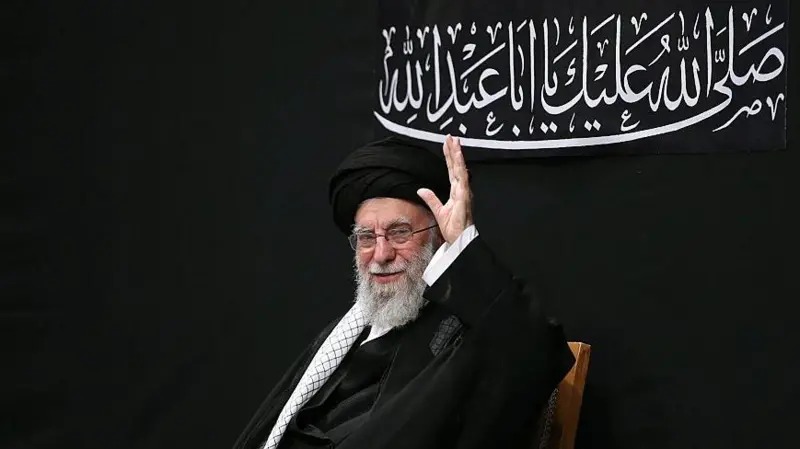
ISLAMABAD (Sapeher Times) The martyred Supreme Leader, Ayatollah Ali Khamenei,was the second Supreme Leader of Iran, a high-ranking Shia religious authority, and a very powerful and influential political and religious figure in the Islamic world, who was martyred in an airstrike in Tehran on February 28, 2026. He served as the Supreme Leader of Iran and Commander-in-Chief of the Armed Forces for almost 36 years from 1989 until his martyrdom. Ayatollah Ali Khamenei was born on April 19, 1939, in the holy city of Mashhad, Iran, into a scholarly and religious family. His father, Ayatollah Javad Khamenei, was a renowned religious scholar. He received his early religious education in Mashhad and later attended the great seminaries of Najaf Ashraf (Iraq) and Qom (Iran) to study higher Islamic sciences, jurisprudence, and principles of jurisprudence, where he benefited from the guidance of great teachers such as Ayatollah Boroujerdi and Imam Khomeini. In the 1960s and 1970s, he was an active member of the movement against the oppressive royal regime of Iran (Reza Shah Pahlavi) under the leadership of Imam Khomeini, for which he was arrested several times and was also exiled. After the success of the Islamic Revolution in Iran, he was appointed a member of the Revolutionary Council and played a central role in laying the foundation of the Islamic Republic. In 1981-1989, he was elected President of Iran with a large majority twice and led the country through the most difficult period of the Iran-Iraq War. After the death of the founder of the revolution, Imam Khomeini, in June 1989, the Assembly of Experts (Majlis-e-Khargan) elected him as the second Supreme Leader of Iran. He held this highest position for almost 37 years and was considered the most powerful figure in the region’s strategic politics. On February 28, when Israel and the United States launched attacks on Iran, Ali Khamenei was targeted along with other members of his family in a joint attack in Tehran the very first day. Some members of his family were also killed with him, for whom a ceremony was held in Tehran last week. During the war, it was said that Ali Khamenei’s burial was being postponed until an appropriate time, but no date was given. Even after the ceasefire, preparations for the ceremony were mentioned, but for some reason they did not take place. After his martyrdom, his son, Ayatollah Mujtaba Khamenei, was elected as the new Supreme Leader.
The funeral prayer of Iran’s martyred Supreme Leader Ayatollah Ali Khamenei was led by his eldest son Ayatollah Seyyed Mustafa Khamenei. The six-day funeral ceremonies were held in Tehran, Qom, Najaf, Karbala and Mashhad. Approximately 43 million people attended the condolence procession at the shrines of Imam Hussein (AS) and Hazrat Abbas (AS) in Karbala, while more than 7 million mourners attended in Najaf Ashraf. Millions of people gathered on the streets of Mashhad, carrying black and red flags symbolizing revenge and shouting strong slogans against Israel, the United States, and US President Donald Trump. The funeral prayer was attended by other members of the Khamenei family, as well as high-ranking religious and political figures. However, the current Supreme Leader, Ayatollah Mojtaba Khamenei, was not present in Mashhad on this occasion, which became a focal point. It is clear that Ayatollah Ali Khamenei was martyred in a US and Israeli attack on February 28. His funeral and burial ceremonies began on July 3 after the ceasefire. Political leaders and representatives from more than 45 countries attended these events. According to the Iranian News Agency, another condolence gathering was held after the Maghrib and Isha prayers at the Shrine of Hazrat Masoumeh (Qom), in which Ayatollah Mojtaba Khamenei participated. This marked the end of his last journey, but prayer ceremonies continue across the country. He established a strong defensive bloc against the United States and Israel in the Middle East by backing Lebanese Hezbollah, Palestinian resistance groups (Hamas), and Yemen’s Houthis, which made him emerge as the most influential leader in regional politics. During his 36-year reign, Iran made extraordinary defense and strategic progress in the fields of nuclear technology, missile program, and science despite US and Western economic sanctions. He served for some time during the revolutionary period as Deputy Minister of Defense, Supervisor of the Revolutionary Guard Corps (IRGC), and Imam of Friday prayers in Tehran. During a speech in a mosque in June 1981, He was bombed, permanently disabling his right hand, but miraculously survived: he was elected Iran’s third president in October 1981 with a landslide majority (97% of the vote). He served two consecutive terms during the most difficult and critical period of the Iran-Iraq War (1980-1988).The attack to assassinate Iran’s Supreme Leader, Ayatollah Ali Khamenei, did not take place in the middle of the night (darkness of night); contrary to expectations, the attack took place in the morning light. The reason for the attack in the morning light was the important intelligence that American and Israeli intelligence had received a few hours earlier. American and Israeli intelligence decided to take immediate advantage of this intelligence without waiting for nightfall. The United States and Israel had been looking for an opportunity for the past several months to see when top Iranian officials would gather in one place to attend a meeting. The intelligence was that Seyyed Ali Khamenei would be present in a compound located in the central area of Tehran. Along with the information about Khamenei’s presence in the compound, Israeli and American intelligence had also learned the location where other top Iranian military and intelligence officers were to gather to attend the meeting at the same time. The United States and Israel had been monitoring the movements of Supreme Leader Seyyed Ali Khamenei for the past several months. Although the method of monitoring was kept secret, US President Donald Trump hinted at it in a social media post. Trump wrote that “he (Khamenei) failed to evade our intelligence and sophisticated tracking systems.” It is possible that a human source in Iran was reporting his movements, but it is more likely that key Iranian officials were being monitored on technical grounds. During the Iran-Israel 12-day war in June last year, Israel successfully targeted scientists and senior officials associated with Iran’s nuclear program, and it was later reported that telecom and mobile phone systems were accessed to track the movements of these key individuals. During this process, the movements of the bodyguards who were responsible for the security of key Iranian officials were also tracked. This long-term surveillance and monitoring approach helped to learn about the lifestyle and routine of key figures. With the help of this method, it was possible to find out their moments of weakness along with being aware of their target’s activities. Iran knew that Supreme Leader Seyyed Ali Khamenei was being targeted by enemies, so the failure to identify and deal with moments of weakness during the process of ensuring his safety reveals a major failure of Iranian security and intelligence agencies. It also proves that the US and Israel keep changing their methods of identifying targets and find new ways to track people. The Iranians probably also guessed that a major attack of this nature could not have been carried out during daylight hours. According to a report in the New York Times, intelligence information about the Supreme Leader’s presence in the compound came from the US intelligence agency, the CIA, which was shared with Israel because the attack was to be carried out by Israel. The US and Israeli approach shows a division of labor, with Israel focusing on attacks targeting the top leadership, while the US targets mostly military targets. Importantly, intelligence on the movements of the Supreme Leader and other officials was obtained well in advance, allowing for the planning of attacks using jets that could launch missiles from a distance and hit targets. The attack was not designed to target just one senior leader (Khamenei) but was intended to be the start of a broader campaign (after targeting Khamenei), which was now being expanded over time and as opportunities arose. It takes about two hours for the Israeli jets to reach Tehran, but it is still unclear how far they fired their missiles at Tehran. When the decision to attack was made after receiving intelligence about Khamenei’s presence, Israeli planes dropped 30 bombs on his compound at around 9:40 a.m. The purpose of dropping 30 bombs at once was to reach a depth that would ensure that the target was hit, as the Supreme Leader was using an underground bunker beneath the compound for protection. To reach that depth, different types of bombs were used to ensure that the target was successfully reached. In addition to the Supreme Leader’s compound in Tehran, other locations, including the office of President Masoud Peshkian, were also attacked.
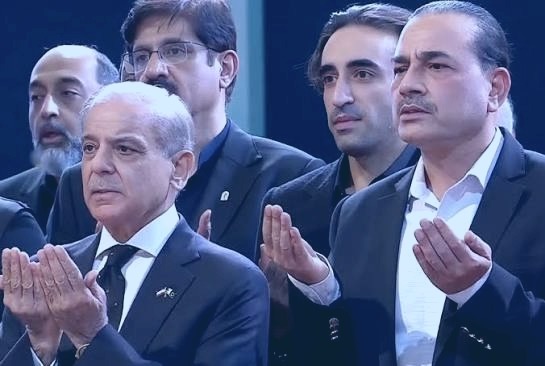
 The Iranian president later issued a statement saying he was safe in the attacks. Iran confirmed the deaths of three top defense officials, including Ali Shamkhani, Secretary of the Defense Council, Defense Minister Brigadier General Aziz Nasserzadeh, and General Mohammad Pakpour, Commander-in-Chief of the Revolutionary Guards. When the attack took place in Tehran, it was nighttime at Mar-a-Lago, Florida, and President Trump was closely monitoring the situation with his top officials. Israeli and American officials knew that it could take several hours for confirmation of the Supreme Leader’s death to come after the attack. Iran was prepared for this possibility, and therefore the successors of not only Khamenei but also other top Iranian officials were planned in advance.Pakistani Prime Minister Shahbaz Sharif and Army Chief Field Marshal Asim Munir attended the funeral prayers of Iran’s martyred Supreme Leader Ayatollah Ali Khamenei in Tehran, as the Pakistani delegation offered condolences and paid tribute to the nation’s martyred leader. The funeral prayers were attended by several heads of state, government leaders, and top foreign dignitaries. Shaheed Khamenei was killed in a US-Israeli airstrike on February 28, the first day of the Iran-Iran war, but funeral ceremonies were postponed for months due to the conflict. Pakistan is trying to bolster its rising diplomatic profile after playing a central role in mediating between Iran and the United States during this year’s conflict. Pakistan facilitated a temporary ceasefire between Iran and the United States on April 8, ending weeks of fighting and creating space for diplomacy. Prime Minister Shahbaz Sharif and Army Chief Field Marshal Asim Munir then emerged as key negotiators during the temporary ceasefire that led to the Islamabad talks on April 11-12, which brought together senior American and Iranian negotiators for the highest-level face-to-face meeting since Washington and Tehran severed diplomatic ties in 1979. Although the talks did not produce a comprehensive agreement, they laid the groundwork for continuing diplomacy. Pakistan’s mediation efforts later contributed to Islamabad’s Memorandum of Understanding (MoU), an interim framework aimed at advancing talks on regional security, sanctions relief and maritime stability after the ceasefire. Army Chief Field Marshal Asim Munir was tasked with maintaining direct communication channels between Tehran and Washington during the height of the tensions, while Pakistan’s Prime Minister Shahbaz Sharif engaged regional leaders to maintain diplomatic momentum.