


Lahore (Sapeher Times) Researchers, Policymakers Discuss AI’s Role in Fixing Pakistan’s Healthcare Gaps

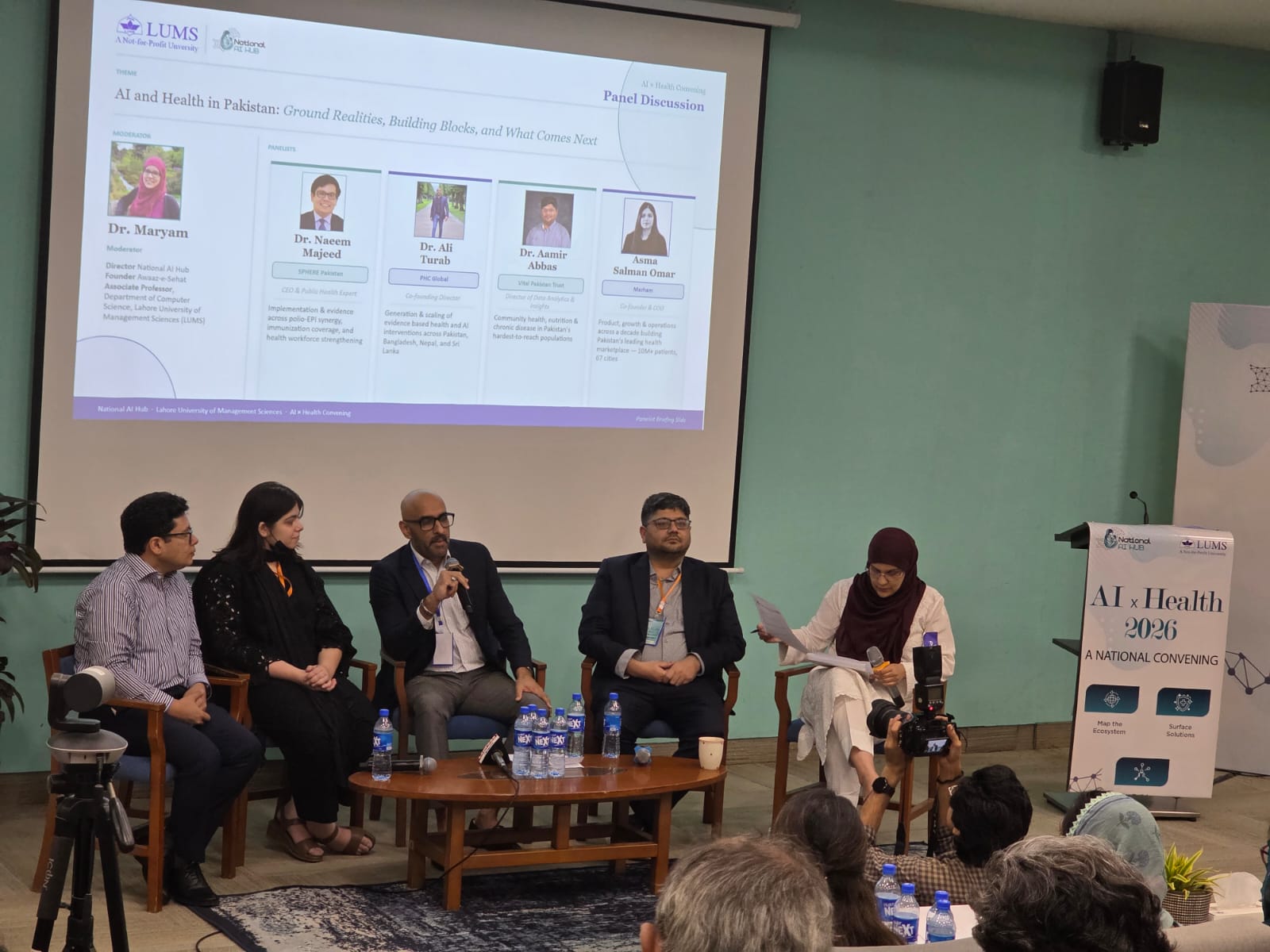
Lahore (Sapeher Times): Pakistan’s first national convening on artificial intelligence in healthcare, held at SBASSE, LUMS under the National AI Hub, brought together clinicians, researchers, policymakers, and technology innovators, with calls for urgent system-wide reform to move beyond fragmented pilots and scale digital health solutions nationwide.
Opening the session, Associate Professor and Director of the National AI Hub, LUMS, Dr Maryam Mustafa, said Pakistan’s AI-for-health landscape is active but highly fragmented, with innovation spread across hospitals, universities, startups, and government programmes working in isolation. She said this has led to duplication of effort and prevented promising pilots from scaling, adding that “breakthroughs are not transferring” across the ecosystem. She called for a unified national map of AI tools, datasets, and healthcare deployments to enable coordination and scale.
Vice Chancellor of LUMS, Dr Ali Cheema, said the convening had brought together key stakeholders around a “massive transformation problem” and urged sustained collaboration beyond a single event or project. He said Pakistan’s high maternal, child, and neonatal mortality reflects systemic pressures driven by rapid population growth, rising demand, and limited health investment.
He said innovation and technology offer an opportunity to address these constraints but stressed that technology alone is not enough. He outlined the need for three aligned elements: innovation, behavioural change for adoption, and deep system reform of incentives and governance. Without this, he warned, fragmented interventions would fail to produce large-scale impact.
He also cautioned against viewing AI as a simple solution, noting risks such as bias, manipulation, and hallucination, and called for strong ethical and institutional safeguards in its deployment.
In a panel discussion moderated by Dr Maryam Mustafa, featuring Dr Naeem Majeed (Sphere Pakistan), Ms Asma (Marham), Dr Ali Turab (PHC Global), and Dr Aamir Abbas (Vital Pakistan Trust). Panelists discussed barriers to scaling digital health and AI solutions, including weak coordination across institutions, lack of shared standards, and limited system-wide visibility of ongoing deployments.
Speakers highlighted that while multiple AI-driven health innovations exist in Pakistan, most remain confined to pilot stages due to the absence of integrated infrastructure and governance mechanisms needed for national scale-up.
Organisers said the convening marked an early step toward building a national roadmap for AI in healthcare and shifting from isolated innovation to coordinated system-level transformation.


