ISLAMABAD (Sapeher Times) Learning Session on “From Diplomatic Recognition to Strategic Connectivity: 55 Years of Türkiye-China Relations and the Future of Eurasia” for the China Fellowship Programme 2026–27 held at Regional Connectivity Center (RCC), Shaheed Benazir Bhutto Women University (SBBWU), Peshawar, and Department of Political Science & International Relations, Hazara University, Mansehra


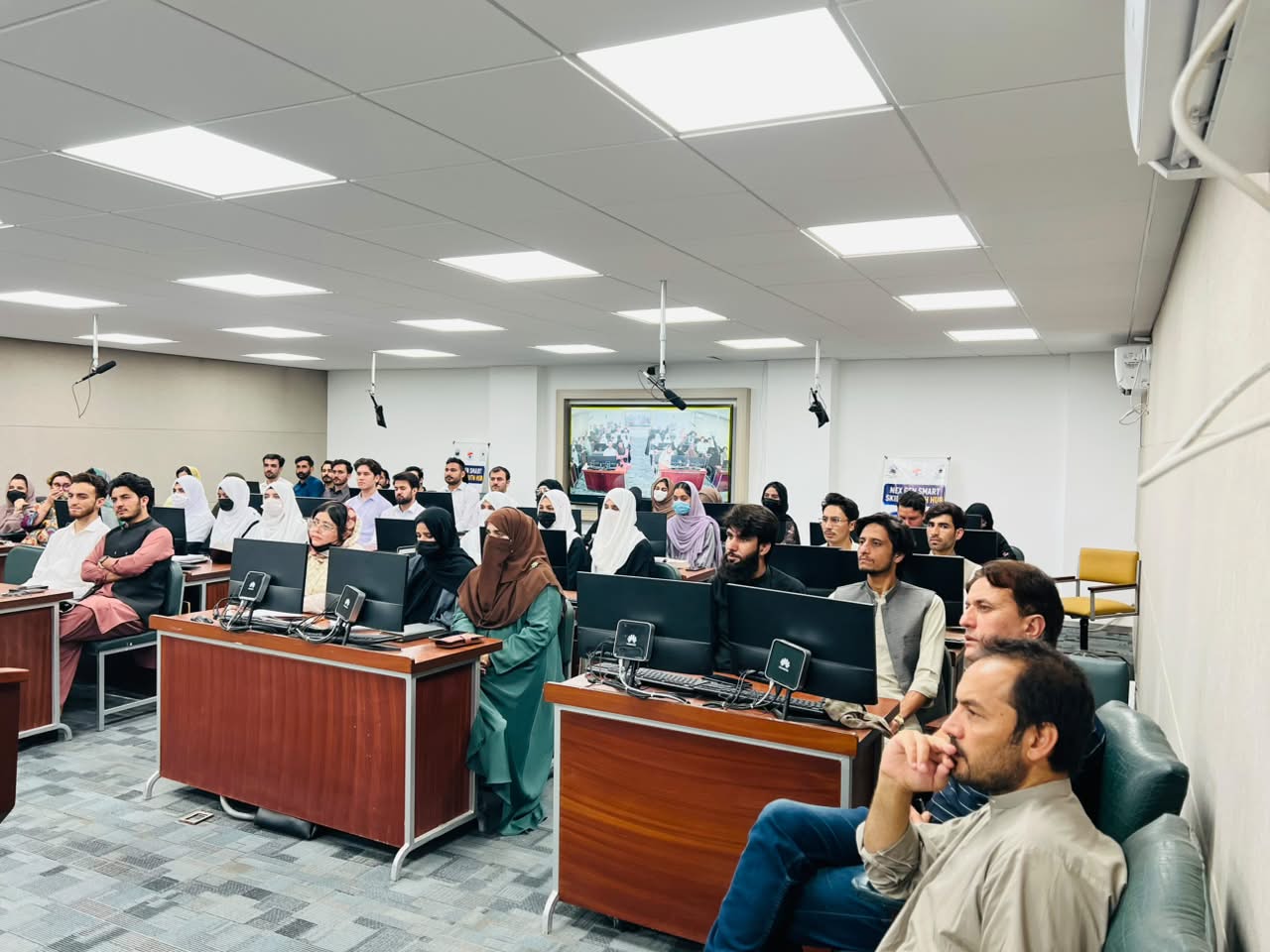
ISLAMABAD (Sapeher Times) On 8th October 2026, the second session of the China Fellowship Programme 2026–27 was held. The China Fellowship Programme 2026–27 is jointly organized by the Pakistan Research Center for a Community with Shared Future (PRCCSF) in collaboration with the Embassy of the People’s Republic of China in Pakistan, with the support of the Institute for a Community with Shared Future (ICSF), Communication University of China (CUC), Beijing, and was held at the Regional Connectivity Center (RCC), Shaheed Benazir Bhutto Women University (SBBWU), Peshawar, and the Department of Political Science & International Relations, Hazara University, Mansehra.
The session was led by Dr. Selnaz Başkan Yurdakul, Professor in the Department of Eastern Languages and Cultures at Sichuan International Studies University (SISU), China. An academic specializing in international relations, Türkiye–China relations, migration, border politics, and geopolitics, Dr. Yurdakul delivered a lecture on “From Diplomatic Recognition to Strategic Connectivity: 55 Years of Türkiye–China Relations and the Future of Eurasia.”
Drawing on key milestones in the relationship, Dr. Yurdakul discussed the establishment of diplomatic relations in 1971 and the subsequent expansion of economic and political ties. She highlighted the 2010 establishment of strategic cooperation, the 2013 launch of the Belt and Road Initiative, and the 2015 Middle Corridor–BRI cooperation framework as important developments shaping connectivity across Eurasia.
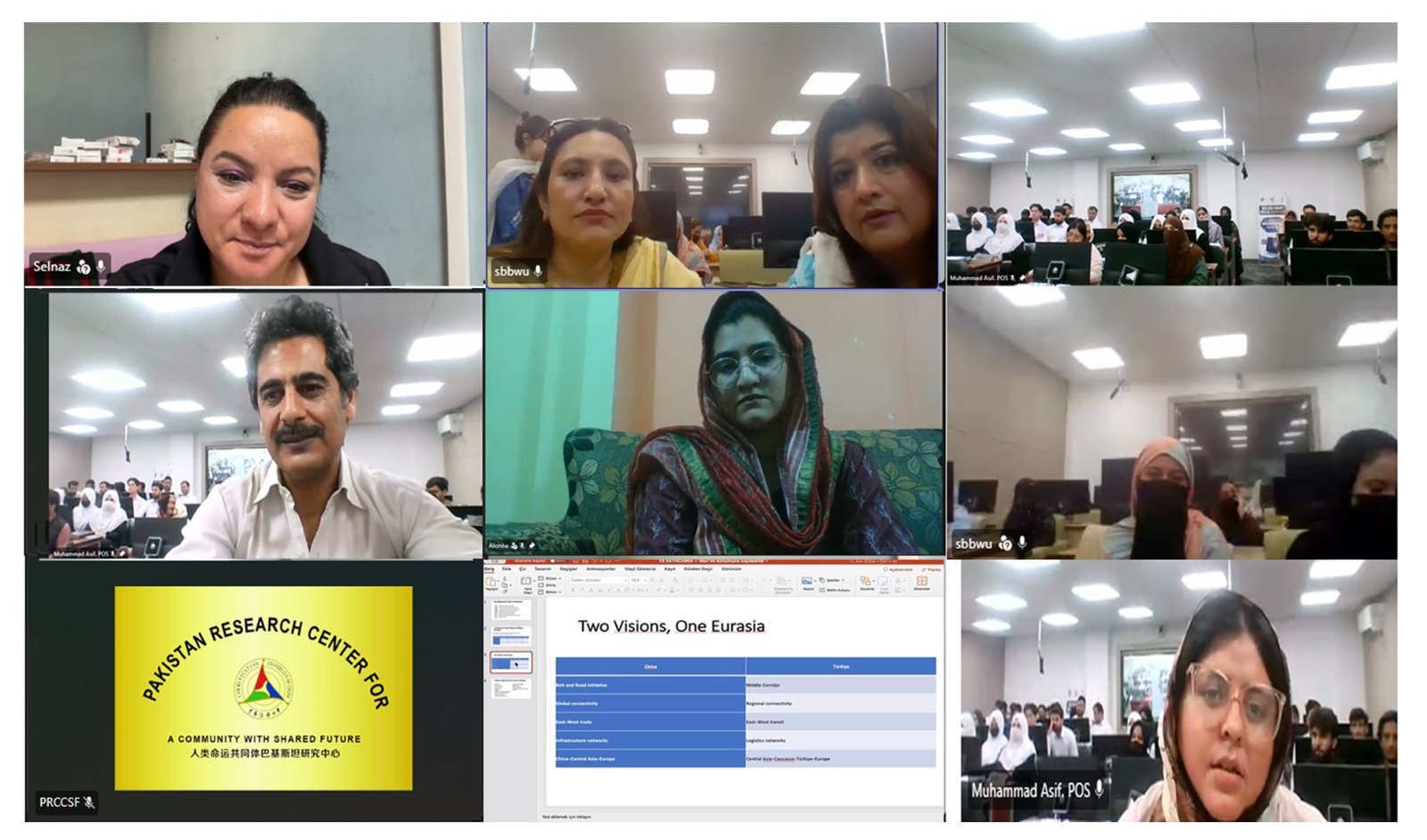
The lecture also examined challenges in the relationship, including the trade imbalance, market access, and economic competition, alongside differing foreign-policy priorities, Türkiye’s NATO membership, Türkiye–EU relations, and the Uyghur issue. The discussion considered how both countries can balance economic and political interests while navigating these differences.
Students actively participated in a question-and-answer session, exchanging perspectives with the speaker. The session was moderated by Ms. Alishba Aslam, who facilitated the proceedings and coordinated the interaction between Dr. Yurdakul and the participants.