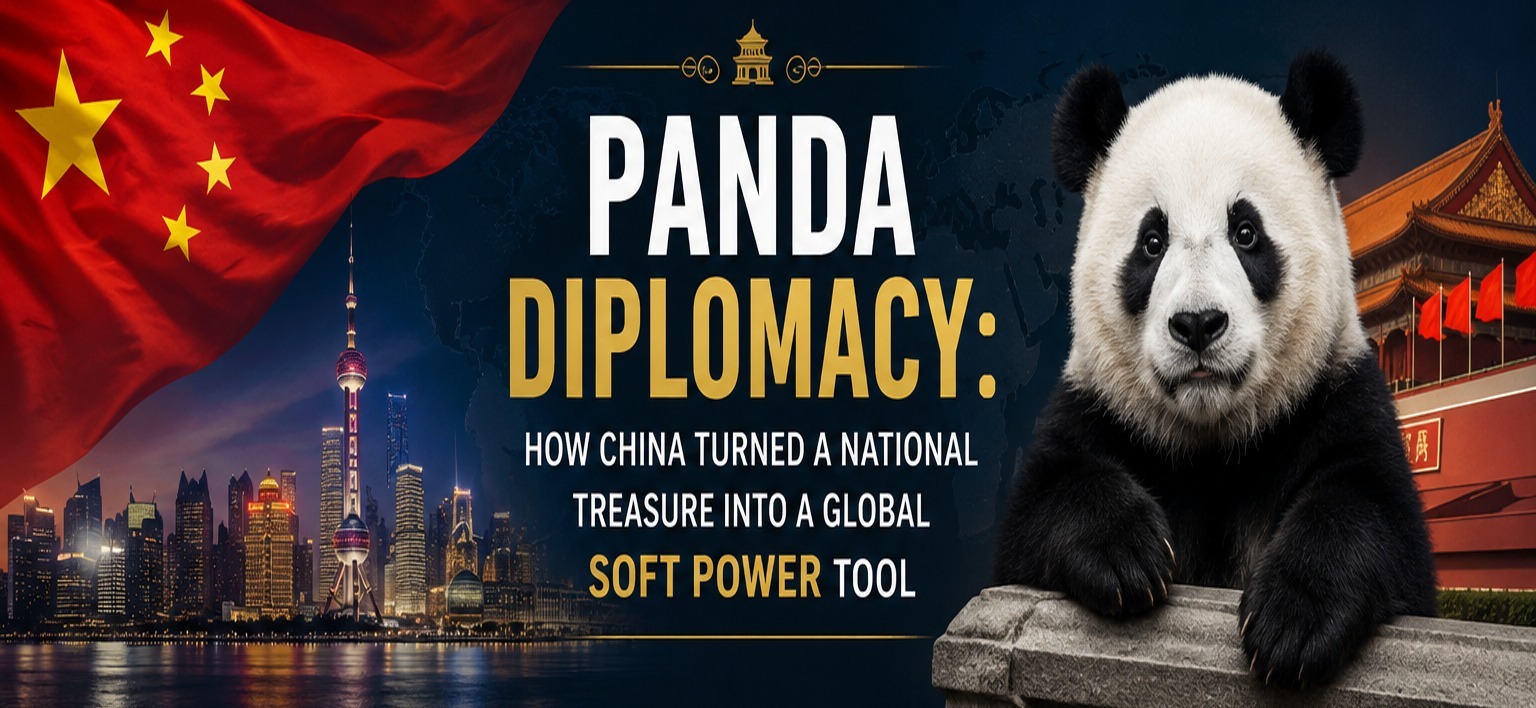
Islamabad (Sapeher Times) Panda Diplomacy: How China Turned a National Treasure into a Global Soft Power Tool


By Ms. Yusra Binte Nisar, Research Assistant, Pakistan Research Center for a Community with Shared Future (PRCCSF), Islamabad
Islamabad (Sapeher Times) In today’s increasingly interconnected world, the meaning of power has changed a lot. There was a time when there were only a couple of parameters to judge how powerful a country is. These included: military might and the economic power. Traditionally, power was always defined in terms of use of force, coercion or inducement and it was given the name of ‘hard power’. In 1990, an American Political Scientist named Jospeh S Nye, coined a new term, ‘soft power’. It was a new face of power, other than the usual approach to the concept of power, which essentially means hard power. Soft power, he explained, “is the ability to get others to want what you want through attraction and persuasion rather than coercion or payment. Simply put, hard power is ‘coercion’ and soft power is ‘attraction’. The terminology is new but the concept is centuries old. According to Jospeh Nye, the soft power of a country rests primarily on three resources: its culture (in places where it is attractive to others), its political values (when it lives up to them at home and abroad), and its foreign policies (when they are seen as legitimate and having moral authority). Some other sources through which nations can enhance their soft power include, education, media, sports, and so on. In 21st century, many countries rely on soft power to strengthen their global image. For instance, South Korea has captivated global audience through its Hallyu (Korean Wave). K-pop groups such as BTS and BLACKPINK, along with K-beauty, K-dramas, and K-food, have transformed South Korea into a cultural powerhouse. Through ‘Cool Japan’ initiative, Japan promotes anime (e.g., Naruto, One Piece), manga, sushi, and traditional arts to enhance its global appeal. Similarly, when Qatar hosted the FIFA World Cup 2022, the first to be held in a Muslim-majority and Arab country, it showcased its rich culture, warm hospitality, religious heritage, and world-class infrastructure to the world, strengthening its international image through sports diplomacy. The Yoga Diplomacy of India is another noteworthy example of soft power. Among these examples, China has developed one of the most distinctive and memorable forms of cultural diplomacy: Panda Diplomacy.
Panda Diplomacy: China’s Most Iconic Soft Power Strategy
Pandas are one of the most recognizable emblems of China and a significant source of ‘soft power’. When I think of China, I think of giant pandas, just as kangaroos make us think of Australia, bald eagles of the United States, and Asian elephants of Thailand. They are one of China’s most recognizable national symbols representing the country’s unique wildlife and are a powerful instrument of cultural diplomacy and soft power.
Panda diplomacy is a form of soft power referring to the practice in which China loans or gifts Giant Pandas to other states to reinforce diplomatic ties or symbolize goodwill between nations. In the words of His Excellency President Xi Jinping, pandas are the “envoys of friendship”. Panda diplomacy appeals directly to ordinary people. Pandas are universally adored animals because of their cuteness and friendly nature. When visitors visit the zoos to see pandas, a positive media image is built and it also makes people view China’s growing influence through friendly lens. This emotional connection helps China foster goodwill among ordinary citizens that political dialogue alone cannot.
From Gifts to Global Ambassadors: The Evolution of Panda Diplomacy
The very first instance of panda diplomacy was recorded in Tang Dynasty (618–907 CE) or the 7th century when Empress Wu Zetian gifted two bears to Japan as a gesture of goodwill. After the founding of the People’s Republic of China, pandas became symbol of friendship and goodwill. China used to gift pandas to the countries with which it wanted to establish diplomatic relations. North Korea, the United Kingdom, the United States of America, France, Japan, and Mexico are some of the notable names. However, modern panda diplomacy is often associated with the 1970s. The most famous example of panda diplomacy occurred in 1972 when China gifted two giant pandas, Ling-Ling and Hsing-Hsing to the United States following the historic state visit of American President Richard Nixon to Beijing. They became major attractions at the Smithsonian National Zoo. Later on, China presented pandas to France in 1973 and the UK in 1974. This is how cute cuddly panda bears became ambassadors of China’s bilateral relations.
In 1984, when the declining populations of giant pandas became a serious matter of concern for China, it shifted from gifting pandas permanently and introduced a loan program instead. Under this programme, China allowed overseas zoos to host pandas for ten years in exchange for annual fees of up to $1 million. Panda diplomacy was at its peak in 2019. At that time, 21 countries had pandas. It is worth mentioning that China’s panda diplomacy is very different from that of Hallyu, Bamboo diplomacy, Cool Japan, or other such forms of soft power diplomacy. For Chinese people, giant panda bears carry deep emotional significance. This emotional attachment, dwindling numbers and the thought of conserving the endangered species of giant pandas made China change its approach of gifting pandas permanently. It was a turning point in panda diplomacy. There were two main objectives: strengthening giant panda conservation and enhancing China’s soft power through long-term international cooperation.
Conservation and Diplomacy: The Two Pillars of Modern Panda Diplomacy
When China replaced permanent gifts with long-term loans, it was able to retain the ownership of the pandas while providing for their long-term protection. As different countries had different climates, zoos followed different breeding practices and they were taking care of pandas differently. All these factors made coordinated conservation difficult and people were also very concerned about pandas’ health. That’s why when the loan program was introduced, it enabled Chinese and international scientists to work together on breeding, veterinary and conservation research. This partnership opened the door for close collaboration in veterinary science. It also ensured that cubs born abroad will be returned to China for the long term survival of the specie.
Furthermore, the loan system transformed the gesture of panda diplomacy into something more than that of friendship. This way pandas became long-term Chinese ambassadors of goodwill instead of one-time diplomatic gift. The presence of pandas in foreign zoos made China and that country’s diplomatic relations enter into a new chapter of years of scientific collaboration, cultural exchange, human connectivity, and a positive global image.
To put it simply, through panda diplomacy and carefully regulated panda loan agreements, China has shown the world that effective diplomacy is not limited to political dialogues only. International partnerships can be built on respect for each other’s culture and heritage. It also underscored that diplomatic relations and wildlife conservation can go hand in hand.
Why Panda Diplomacy Still Matters Today
The uniqueness of China’s panda diplomacy lies in the fact that it combines cultural attraction, environmental cooperation and biodiversity conservation. It is more than simply sending pandas to foreign zoos. Geographically and culturally, pandas are distinct to China. That’s why, pandas are considered China’s national heritage. For the rest of the world, giant pandas are a global icon for wildlife conservation. Hence, each panda in a foreign zoo is just like a living ambassador that promotes Chinese culture around the world while China, through close collaboration with the veterinary experts of that country, contribute to international biodiversity conservation and environmental protection initiatives. This balance between diplomacy and conservation has become one of the defining features of China’s soft power strategy.
The long-term nature of panda diplomacy adds to its value. It is because panda loan agreements usually last for many years resulting in lasting cooperation between governments, researchers, and zoological institutions. It then opens new areas of cooperation in multiple fields. This indicates that panda diplomacy cannot fix every political issue but it helps create stronger friendships and trust between China and other countries.
In a world full of competitions, uncertainties, and conflicts, panda diplomacy reminds us that influence is not always gained through political or economic power. There are many forms of soft power but China chose to strengthen its international image in a unique and memorable way. China decided to use giant pandas, one of the most treasured national symbols of China, to expand its influence beyond its borders. And that means that the best diplomatic influence is sometimes not just politics but connections that really touch people’s hearts.