ISLAMABAD (Sapeher Times) Beyond Infrastructure: Why Human Connectivity Is Essential for the Success of the BRI


By Mr. Khalid Taimur Akram, Executive Director, Pakistan Research Center for a Community with Shared Future (PRCCSF), Islamabad
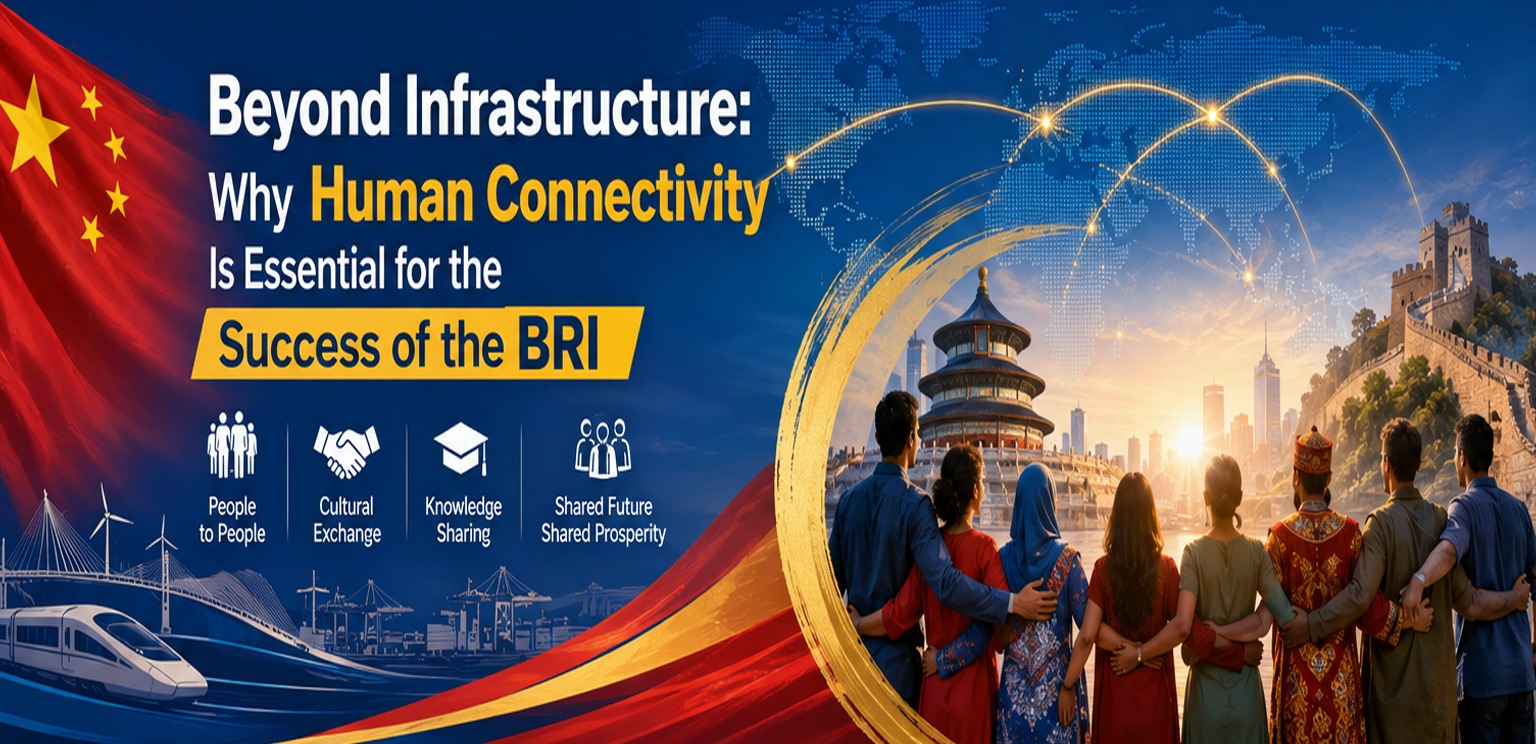
ISLAMABAD (Sapeher Times) The Belt and Road Initiative (BRI) was initiated by China in 2013 and is often considered as China’s economic strategy with which it aims to enhance trade and connectivity between Asia, Europe, and Africa by developing critical infrastructures like roads, railways, and ports. But BRI is far more than infrastructure. Of course, China launched this mega project to create new trade routes linking China with the rest of the world. It has improved connectivity between continents but physical links are only one aspect of this mega project. On closer inspection, one can see that BRI has built the connectivity not only of physical infrastructure but also of human connectivity, also known as people-to-people connectivity. Concrete and steel are not the only parameters to measure the success of the BRI. Infrastructure connects cities and countries, but human connectivity connects hearts and minds. For sustainable development, people must trust each other, understand each other and cooperate with each other.
In this sense, China has shown that the BRI is not only about building roads, but also about building relationships that can sustain a shared future for generations to come.
People-to-People Exchanges Build Trust
Infrastructure facilitates the movement, connects the countries but it cannot connect people until and unless they do not have any affection towards each other or they feel connected. So, it can be deduced that roads and bridges help people move from one place to another but human interactions, trust and respect for diversity create understanding and connections among people coming from different backgrounds that ultimately lead to fruitful partnerships on the government levels.
Through cultural programs, educational exchanges, tourism, research and academic collaborations, people from different countries get a chance to learn from each other. For instance, students studying abroad gain new perspectives. They promote their values and learn new things from their peers. This way they become the ambassadors of friendship between their respective countries. Similarly, artists collab beyond the borders. Sometimes they have joint concerts, exhibitions, or other such shows. Their fans and followers feel connected to each other due to the masterpieces their idols have created. Such connections also eliminate harsh feelings and give way to positive feelings.
When ordinary citizens have positive experiences with each other, they become advocates of international cooperation. This trust makes economic and political partnerships more durable and sustainable.
Shared Development Requires Community Participation
The BRI strives to achieve shared prosperity. For this purpose, the local community must become active participants in development and not passive observers. Projects that create employment opportunities, transfer skills and support local businesses create a greater sense of ownership amongst communities. People can directly benefit from economic growth through training, vocational education and knowledge sharing.
Human connectivity makes development people-centered. It encourages listening to local needs and adapting projects to maximize social benefits. When communities feel included, they are more likely to support long-term cooperation.
Cultural Understanding Strengthens Regional Harmony
Over more than 150 countries are part of the China’s Belt and Road Initiative. The all have diverse cultures, speak different languages, have different traditions and values. For BRI, this diversity is the source of strength. Under the umbrella of BRI, China also promotes cultural harmony and understanding, hence contributing to regional harmony and peaceful coexistence.
Cultural festivals, media collaborations, sister-city partnerships, and youth exchanges provide opportunities for people to appreciate each other’s values and heritage. Such interactions help reduce stereotypes and misconceptions that can sometimes hinder international cooperation.
To live in this interconnected world, empathy and mutual respect are essential. Human connectivity encourages nations to see one another not simply as trading partners but as members of a shared global community working toward common goals.
Digital Connectivity and Innovation
People-to-people connectivity under the BRI is not limited to cultural and academic exchanges only. Digital connectivity is an important dimension that cannot be neglected. Under BRI, digital infrastructure, e-commerce platforms and smart technologies are being launched. They have provided an opportunity to businesses, entrepreneurs, students, and researchers to collaborate more effectively across national boundaries. These digital linkages create new opportunities for innovation, knowledge sharing, and economic inclusion, ensuring that the benefits of connectivity extend beyond physical transportation networks.
Public Health and Humanitarian Cooperation
At the time of global health crises like COVID-19 pandemic, human connectivity played a crucial role. States across the globe cooperated with each other, saved millions of lives and also helped each other stabilize their economies. Many BRI partner nations have improved their ties through cooperation in emergency response, medical research, public health, and healthcare training. Such collaboration shows that connectivity is more than just business; it also includes initiatives to solve common problems and enhance community well-being. Collaborating at times of disaster helps nations develop trust and unity that go much beyond individual development initiatives.
A Future Built on Both Infrastructure and Human Bonds
BRI is a mega project and the impressive infrastructure associated with it will continue to play a significant role in enhancing connectivity and economic development. However, physical links and infrastructure alone cannot guarantee lasting success. The future of the BRI depends equally on investing in people. Education, cultural exchange, community engagement, and professional cooperation create the human bonds that sustain partnerships through changing circumstances.
As countries work together under the BRI framework, strengthening people-to-people connections should remain a priority. After all, railways transport goods, ports facilitate trade, and highways shorten distances, but it is human understanding, trust, and friendship that transform connectivity into meaningful cooperation.
The BRI represents more than an ambitious development initiative. At its best, it is an opportunity to bring people closer together, promote shared learning, and build a future based on collaboration and mutual benefit. By looking beyond infrastructure and embracing the importance of human connectivity, the BRI can continue to serve as a platform for lasting prosperity and stronger international friendships.