


ISLAMABAD (Sapeher Times) Iran-US talks, Pakistan a ‘hopeful’ mediator?

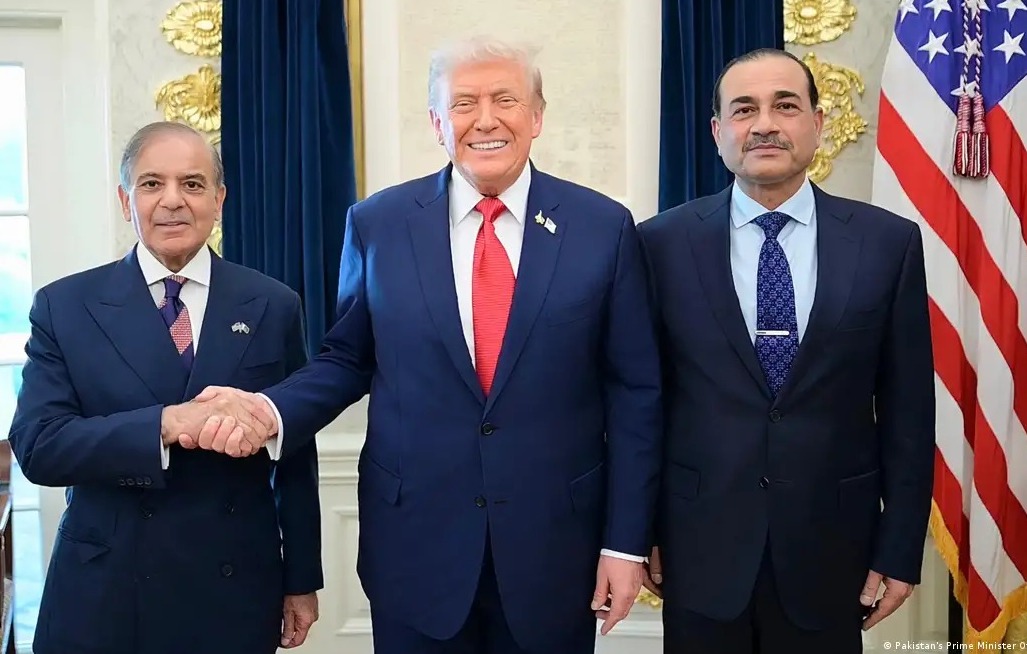
ISLAMABAD (Sapeher Times) Pakistan has maintained itself as a ‘positive and hopeful’ mediator in the ongoing diplomatic process between Iran and the US, which aims to establish lasting peace in the Middle East.
The peace process between the US and Iran, initiated with the cooperation of Pakistan, is currently at a very sensitive and active stage, where Pakistan is playing the role of a neutral and transparent facilitator.
The facts in the context of the current diplomatic situation are as follows:
Current status of the peace process and Pakistan:
The Prime Minister of Pakistan has confirmed that the Iranian proposals and responses received by Pakistan have been conveyed to the other party (the US) with great speed.
Government action:
The Ministry of Foreign Affairs is continuously taking action on this sensitive diplomatic mission. However, being an honest facilitator, Pakistan strictly adheres to the principle of not making public the confidential content of the talks or the details of diplomatic documents held between the two sides. Despite all the regional challenges, the peace process is fully intact and ongoing. Hopes for the talks:
After the first round of talks held in Pakistan on April 11 and 12 (which resulted in a temporary ceasefire), continuous diplomatic efforts and preparations are now underway to hold the second round of talks in Islamabad. Pakistan is optimistic: NADRA and Foreign Office officials are determined to expect a lasting peace agreement between the two sides “sooner rather than later”.
If the parties are willing, Pakistan would consider it a great honor to host this most important agreement.
Decision in the hands of the parties:
Spoken by Tahir Andrabi, Pakistan’s role is to provide a conducive environment, break the deadlock and restore communication. Pacemaking: The finalization of the negotiations, their acceleration or deceleration, is primarily the responsibility and discretion of the two main parties (Washington and Tehran) directly involved in the talks.
Maintaining morale:
Pakistan’s position is that peace efforts should be continued with perseverance rather than being discouraged by any temporary diplomatic delay or setback. Overall, Pakistan’s diplomatic mission is still engaged in bridging the gulf between Tehran and Washington and is optimistic about the success of this process for the maritime and economic security of the region.
The recent response of the US government is a mixed bag of intense diplomatic pressure, tough statements, and confidence in Pakistan’s mediation role.
The latest response from US President Donald Trump and Washington to the Iranian proposals sent through Pakistan includes the following key points:
Rejection of Iranian proposals and Trump’s strong response:
US President Donald Trump has rejected Iran’s response to the 14-point peace plan received through Pakistan as “Totally Unacceptable”. He has accused Tehran of playing diplomatic games.
Ceasefire in danger:
President Trump has stated that the temporary ceasefire established in April through Pakistan’s efforts is currently on “Massive Life Support”, with a chance of survival of only one percent.
Pakistan as a mediator:
US government’s defense of refusing to change the mediator:
Some circles, including influential Republican Senator Lindsey Graham of the US Senate, have questioned Pakistan’s impartiality. However, President Trump has rejected these demands and has flatly refused to remove Pakistan as a mediator.
Praise for Pakistani leadership:
The US President has publicly praised the key role of Pakistan’s Prime Minister and Army Chief in the ongoing diplomatic crisis. Moreover, a commendation resolution has also been introduced in the US Congress (House of Representatives) by Democratic member Al Green, in which Pakistan’s sincere efforts for peace have been paid tribute.
US demands, deadlock and disagreement on nuclear program:
According to US officials, Iran has focused on ceasefire and maritime security in the Strait of Hormuz in its response, but has not made any major changes in its position on Washington’s main demand, namely Iran’s nuclear program, which has led to a stalemate in the talks.
Considering alternative military measures:
Amid the diplomatic deadlock, the US has signaled that it is considering reactivating its military escort operations to protect commercial and oil ships passing through the Strait of Hormuz. Despite all this tough rhetoric, Washington has not completely shut down back-channel diplomatic contacts with Pakistan. State Department officials are still working with Qatar and Egypt to facilitate a second round of talks in Islamabad.The recent developments and highlights of the Foreign Office of Pakistan are as follows:
1. Ceasefire Efforts:
After the Pak-US-Iran conflict and military operations that began on February 28, Pakistan has been acting as the primary facilitator between the two sides.
Islamabad Talks: The extension of the temporary ceasefire was possible only as a result of direct diplomatic contacts held in Islamabad on April 11 and 12.
Transmission of Iranian Response:
The Iranian Foreign Ministry has handed over its detailed response to Pakistan on the 14-point US peace plan presented for a permanent end to the war.
2. Foreign Office Resolute on Negotiations:
Foreign Office Spokesperson Tahir Andrabi has made it clear that Pakistan should remain positive in this process and should not be discouraged by any possible delay or obstacle.
Responsibility of the parties:
Pakistan maintains that its role as a mediator is to provide a conducive environment and maintain communication, but reaching a final agreement is primarily the responsibility of Washington and Tehran. Expectations of an agreement:
Pakistani officials hope that progress on an interim or permanent agreement between the two countries is expected soon.
3. Support from the international community:
Pakistan’s constructive diplomatic role has received strong support from several global powers, including China, Saudi Arabia, and Austria. Deputy Prime Minister Ishaq Dar has also held detailed contacts with Chinese Foreign Minister Wang Yi in this context.
US leadership’s acknowledgement:
US President Donald Trump’s administration has also acknowledged that the Pakistani leadership is playing a remarkable role in this diplomatic mission to establish peace.
Looking ahead, Pakistan insists that the success of the talks is essential to ensure economic and maritime security in the region (especially the Strait of Hormuz),
The Pakistan Foreign Office spokesperson said that the negotiation process between Iran and the US is still ongoing and Islamabad is participating in this process in a ‘positive and optimistic’ manner. During the weekly media briefing on Thursday, Foreign Office spokesperson Tahir Andrabi said that the role of both sides is key in taking the talks forward. Asghar Ali Mubarak, Senior Diplomatic Analyst of Daily Mail International, asked the question that “During the Battle of Haq ceremony, the Prime Minister of Pakistan has confirmed that Iranian proposals have been received in Pakistan through the Field Marshal.” So has the Pakistani government taken further action on this? It was also asked that proposals have been exchanged between the US and Iran through Pakistan. So where does this peace process stand at the moment? There are hopes that there can be a second round of talks? In response, the spokesperson of the Pakistani Foreign Office said that “the peace process is intact,” “Pakistan is engaged, Pakistan is optimistic,” and it is primarily the prerogative of the negotiators to accelerate the peace process.” The Prime Minister of Pakistan confirmed this and the message was quickly conveyed to the other side.
It is worth noting that on February 28, after the joint attack on Iran by the US and Israel and Tehran’s retaliation, tensions arose in the region, after which Pakistan made mediation efforts. As a result of the talks between Iran and the US in Islamabad on April 11 and 12, it was possible to extend the ceasefire for another two weeks.
In this context, if we examine the situation since the joint attacks on February 28, Pakistan’s diplomatic role has proven to be very important in saving the region from a major war. The important aspects of the diplomatic situation are as follows:
Success of the Islamabad talks Extension of the ceasefire:
The biggest success of these talks hosted by Pakistan was that the two-week temporary ceasefire period could be extended, which averted the risk of further loss of life and property.
Restoring Trust:
The visit of delegations from Washington and Tehran to Islamabad was proof that both sides fully trust Pakistan’s impartial mediation despite serious tensions.
Pressure and Challenges on Pakistan:
On one side, the US and Israel have a military and diplomatic alliance, while on the other, Iran is Pakistan’s brotherly Islamic neighbor. Maintaining balance in such a delicate environment has been a major test of Pakistan’s foreign policy.
Gaining Global Support:
Pakistan has also taken China and other major powers into confidence to advance this peace process so that diplomatic efforts can get strong backing.
The next test phase is implementing the proposals:
As confirmed by the Foreign Office spokesperson, Pakistan has conveyed the Iranian proposals to Washington, and now the ball is in the US’s court as to how it responds to these conditions.
Attempt for a Permanent Agreement:
The extension of the temporary ceasefire is a temporary solution. Pakistan’s main effort is to agree on a formula in the next round of negotiations that can ensure lasting peace in the region and the security of the sea lanes (especially the Strait of Hormuz).Prime Minister Shehbaz Sharif had said in a statement on May 10 that Pakistan had ‘received a response’ from Iran to the US proposal for a permanent ceasefire. A proposal was received last week and was immediately conveyed to the other side. According to the spokesperson, ‘the matter is currently at this stage. Although no final agreement has been reached yet, Pakistan is not disappointed by the delay.’ ‘The peace process is ongoing, we are optimistic and in touch.’ He added that it is primarily the responsibility of the two main parties to advance the peace process, while the role of the facilitators is to maintain a positive atmosphere and continue communication. ‘We should remain positive and maintain communication and not be discouraged by any possible delay.’ Iranian Foreign Ministry spokesman Esmail Baqai had also said that Iran is reviewing the US proposal to end the war that has been going on for more than two months and will inform the mediator Pakistan of its position. On the other hand, in view of the threats and effects arising from the war between the US and Israel against Iran, the government has decided to consult with Pakistani ambassadors posted in important countries. A mini-conference of Pakistani ambassadors will be held in Islamabad tomorrow. Ambassadors posted in the Middle East have been invited to participate, in addition to this, ambassadors posted in important countries of the region will also participate. Pakistani ambassadors posted in the US, Saudi Arabia, UAE, Kuwait, Qatar, Oman and Jordan will participate.On the other hand, the Ministry of Foreign Affairs of Pakistan has based its diplomatic efforts on the principles of sovereignty, territorial integrity and equality of all countries in accordance with the Charter of the United Nations. Under this enduring principled position, Pakistan’s current diplomatic process is based on the following lines:
1. Respect for sovereignty and security guarantees:
Pakistan is clear that whether it is Iran or the United States, respect for the geographical boundaries and sovereignty of both parties is indispensable for regional peace.
Balance of regional powers:
Pakistan does not support the violation of the rights of another in support of one party, which is why close partners like Beijing and Riyadh are also endorsing this neutral and principled role of Pakistan.
2. Future Roadmap for Regional Peace:
Despite all the recent bitter rhetoric and reservations from Washington over Iranian proposals, Pakistan is still hopeful of hosting the next round of talks in Islamabad to permanently end the diplomatic deadlock.
Back-channel diplomacy:
The Foreign Office is in constant contact with other regional facilitators to prevent a complete breakdown of the ceasefire and to soften the Iranian stance within the framework of Washington’s reservations.
Protecting economic and commercial security:
For Pakistan, this peace process is not only of political importance, but the security of commercial shipping in the Strait of Hormuz and the Arabian Sea is also crucial for Pakistan’s own economic survival, for which Pakistan is continuously urging both sides to exercise restraint.
On the other hand, oil prices have increased in global markets after the deadlock in talks to end the war between the US and Iran. According to the British news agency, the two countries could not agree on the points of ending the war and President Trump Iran’s proposals were rejected as ‘unacceptable’.
The Strait of Hormuz is already closed, which has limited the supply of energy resources globally. According to the report, the price of Brent crude increased by $3.14 on Monday, after which the price of oil has reached $104.47 per barrel, which is an increase of 1.23 percent.
Similarly, the price of crude oil has reached $98.51 per barrel, which is an increase of 0.64 percent compared to the previous session. The series of negotiations between the United States and Iran, which began under the mediation of Pakistan, has been going on for quite some time, but hopes of an early end to this dispute were dashed when Tehran’s response to the proposals sent by the United States to Iran for peace talks reached President Trump. He rejected Iran’s response as ‘unacceptable’. US officials say President Donald Trump is set to arrive in Beijing on a visit to China on Wednesday and is expected to discuss Iran, among other issues, with Chinese President Xi Jinping. It is hoped that President Trump will be able to persuade Beijing to use its influence on Iran to play a role in achieving a complete ceasefire and removing obstacles from the Strait of Hormuz.
This recent diplomatic campaign by Prime Minister Muhammad Shehbaz Sharif and Deputy Prime Minister and Foreign Minister Senator Muhammad Ishaq Dar shows that Pakistan is trying to form a broader regional bloc with like-minded countries to de-escalate tensions in the region.
The main diplomatic objectives of the recent high-level contacts are as follows:
1. Relations with Qatar and Azerbaijan:
Qatar has long been a successful and reliable mediator between the United States and the countries of the Middle East. Prime Minister Shahbaz Sharif’s contact with the Qatari leadership is aimed at combining Qatar’s extensive diplomatic experience and back-channel channels in the Iran-US conflict to strengthen the Islamabad peace process.
Azerbaijan’s strategic role:
Azerbaijan has had complex relations with Iran due to geography and in recent years. Pakistan wants to include Azerbaijan in this peace process and obtain security guarantees in the Central Asia and Caucasus region.
2. Pakistan-United Nations (UN) Joint Framework: Senator Ishaq Dar’s contacts with the UN Special Representative are aimed at providing international legal protection to this bilateral mediation. Pakistan wants the United Nations Security Council (UNSC) to ratify any agreement reached by the parties. Regional Foreign Ministers’ Alignment: By taking the foreign ministers of various countries into confidence, Pakistan is making it clear to Washington and Tehran that no country in the region can afford a new war, and a permanent extension of the ceasefire is essential for economic survival.
3. Possible outcome of diplomatic efforts:
By enlisting the diplomatic weight of Qatar, Egypt and China, Pakistan is now preparing a new “joint peace formula” to soften the US president’s recent tough stance in which he called Iranian proposals unacceptable and to show flexibility to Iran on its nuclear program.


