


ISLAMABAD (Sapeher Times) Prospects for a US-Iran ceasefire following Islamabad talks

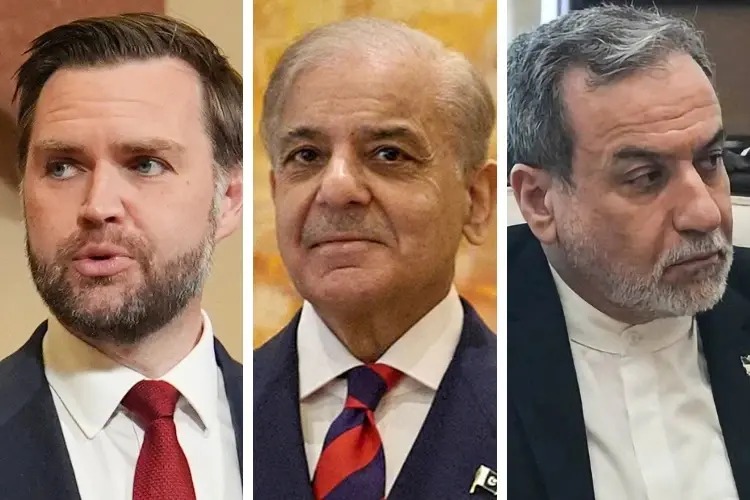
ISLAMABAD (Sapeher Times) Despite extended peace talks in Islamabad, the US and Iran did not reach a final agreement. However, international media remain hopeful for a ceasefire. US President Donald Trump praised Pakistani leadership, particularly Field Marshal Asim Munir and Prime Minister Shahbaz Sharif, for facilitating the discussions. Trump noted that while progress was made on several issues during the 20-hour talks, Iran’s nuclear program remains the main obstacle. He stated that Iran is unwilling to abandon its nuclear ambitions, which the US finds unacceptable. According to Asghar Ali Mubarak, some indirect talks continued through Pakistan after the official negotiations ended, though neither side has confirmed this. There are indications that diplomatic channels remain open. Mohammad Baqer Qalibaf, Speaker of the Iranian Parliament and head of Iran’s negotiating team, acknowledged Pakistan’s efforts and reiterated Iran’s distrust of the US, citing past conflicts. He emphasized that diplomacy, alongside military efforts, is essential to protect Iran’s interests. An Iranian Foreign Ministry spokesperson stated that no agreement was expected in a single meeting. Both sides have presented differing narratives to their publics, making it difficult to assess the talks’ true outcome. The diplomatic community in Islamabad views the talks as a significant step forward, potentially paving the way for future breakthroughs, though challenges persist. The Islamabad talks, held on April 11 and 12, 2026, were the highest-level direct engagement between the US and Iran since 1979, but ended without a permanent ceasefire agreement.
The differences are big, but the fact that the two countries are sitting at the table is a sign that the threat of a major war in the region has been averted.
More progress from the Islamabad talks “Breakthrough” ceasefire, Full consensus is still to be reached, however, both sides have agreed not to take any direct military action for the time being in order to give full play to the diplomatic process.
According to the latest situation, the second round of talks between the delegations of the two countries has been completed, and the focus is now shifting to a “permanent peace agreement”.
The main points of the talks and the ceasefire so far are as follows:
1. Extension and consolidation of the temporary ceasefire
Work is underway to transform the initially agreed two-week ceasefire into a permanent peace agreement. Although a full consensus is yet to be reached, both sides have agreed to refrain from any direct military action for the time being in order to give full play to the diplomatic process. 2. Pakistan’s role as mediator
As the host country, Pakistan’s Prime Minister Shehbaz Sharif and Deputy Prime Minister Ishaq Dar have met separately with both delegations. Pakistan is trying to find a middle ground between Iran’s 15-point agenda and the US’s 10-point agenda through “shuttle diplomacy”.
3. Key Issues and Obstacles
Management of the Strait of Hormuz: Iran has insisted on demanding a transit fee (toll tax) on ships passing through this important trade route, which US Vice President JD Vance has expressed reservations about because the US considers it against the freedom of international waters.
Lebanon and Gaza front: The head of the Iranian delegation, Abbas Araqchi, has called for the release of Iran’s frozen funds and an immediate end to Israeli attacks on Lebanon (Hezbollah) as major conditions for lasting peace.
Security guarantees: The US is demanding from Iran a written guarantee to impose stricter sanctions on its nuclear program and end its support for regional groups. International experts say that although the differences are big, the fact that the two countries are sitting at the table is a sign of averting the risk of a major war in the region. On the other hand, Pakistan’s Deputy Prime Minister and Foreign Minister Senator Ishaq Dar and the Egyptian Foreign Minister have discussed the Islamabad talks and their progress. According to a statement issued by the Foreign Office Spokesperson, in a telephonic conversation with Egyptian Minister Khawaja H.E. Badr Abdul Latif, Ishaq Dar apprised his Egyptian counterpart of Pakistan’s continued efforts to facilitate the ‘Islamabad Dialogue’ and contacts between the parties, according to a statement by the Foreign Office. According to a statement by the Foreign Office, Ishaq Dar also stressed that it is important for all parties to maintain their commitment to the ceasefire. According to the statement, Ishaq Dar reiterated the need for continued dialogue and diplomacy to achieve peace and stability in the region and beyond. US President Donald Trump has said that the US will soon begin a ‘blockade’ of all ships that attempt to enter or exit the Strait of Hormuz. In a lengthy statement on Truth Social, Trump said, “The meeting went well, most of the points were agreed upon, but the one point that was the most important, the ‘nuclear issue,’ could not be agreed upon.” He said that a ‘free passage agreement could be reached ‘at any time, but Iran would not allow it and simply blocked it by saying, ‘There may be a mine somewhere, which only Iran knows about.’ In the same statement, Trump also said that he had instructed the US Navy to ‘search for and stop any ship in international waters that has paid tolls to Iran.’ He said that the US Navy would soon ‘begin destroying the mines laid by the Iranians.’ Trump said, “Anyone who pays the illegal toll will not be allowed safe passage on the high seas.” He added, “Any Iranian who attacks us or our peaceful ships will be destroyed.” According to him, “the blockade is going to start soon.” In another statement on Truth Social, US President Donald Trump also said that “Iran promised to open the Strait of Hormuz, but they deliberately did not fulfill this promise.” This situation has “created anxiety, disruption, and suffering for many countries and people around the world. Iran should begin the process of opening this international waterway as soon as possible.”He also referred to the talks in Islamabad, saying he had been fully briefed by Vice President JD Vance, special envoy Steve Witkoff, and negotiator Jared Kushner. He also praised the efforts of Pakistani Prime Minister Shehbaz Sharif and his team. According to Trump, after the talks, which lasted for “about 20 hours,” the conclusion was that “the real problem is only one: Iran is not willing to give up its nuclear ambitions.” He said that “although many points were agreed upon, which were better than continuing military action, according to him, “all of these points are meaningless compared to the fact that nuclear power cannot be given to such unstable, difficult and unpredictable people.” Meanwhile, US President Donald Trump has said that NATO has offered to help “open” the Strait of Hormuz. He said this in an interview with Fox News, which came shortly after the announcement that the US was planning to block the vital sea passage. According to Trump, the US was ‘very disappointed’ with NATO, but now ‘they want to come and help open the Strait of Hormuz.’ He said that ‘it won’t take long to open this vital waterway, so we will open the Strait of Hormuz at all costs,’ and according to him, the route will be usable again ‘not long after.’ Trump added that ‘the US is sending minesweepers there and according to him, the UK, which is a member of NATO, will do the same.’ He said that ‘from my understanding, the UK and a few other countries are also sending minesweepers.’ US President Donald Trump is considered to be keen on fast-track agreements. Many people had many questions on their minds about how he would react after no consensus was reached in Islamabad, and now his first reaction has come to light. In two lengthy statements on Truth Social, Trump said he would block the few ships currently making it through the Strait of Hormuz. “I have instructed the U.S. Navy to search and seize any vessel in international waters that has paid tolls to Iran,” he wrote. “Anyone paying illegal tolls will not be allowed safe passage on the high seas.” While the statements did not specify how the “safe passage” would be blocked, it is important to remember that the United States has, in the past few months, been raiding and blocking ships traveling to and from Venezuela. Significantly, Trump said that “other countries will also join this blockade,” although he did not specify which countries. Iran’s partial but effective blockade of one of the world’s most important waterways has allowed only ships that are either allies of Iran, countries Tehran considers friendly, or those believed to have paid about $2 million in tolls. Trump also claimed that Iran had promised to open the Strait of Hormuz, even though Iranian officials have repeatedly said otherwise in public statements, presenting the waterway as a key strategic asset. If Trump’s threat is carried out, the amount of oil reaching global markets could be further reduced, with serious economic consequences. These statements do not amount to a resumption of all-out war, but they are certainly another escalation. Following Donald Trump’s threat to block the Strait of Hormuz, the Iranian Revolutionary Guard Corps has released a video showing drone surveillance of the Strait of Hormuz. The video also carries the message that ‘all traffic and armed forces are under full control.’ Meanwhile, Donald Trump told Fox News that he intends to block the Strait of Hormuz, but according to him, this process will ‘take some time.’ Moreover, Oman’s foreign minister has called for the continuation of negotiations between Iran and the United States and an extension of the ceasefire. This statement has come at a time when a key meeting in Islamabad ended without an agreement. Badr Boussaeidi wrote on X, ‘To succeed, all parties may have to be willing to make difficult and tough compromises, but this sacrifice is nothing compared to the pain of war and failure.’ It should be noted that Oman has hosted and mediated several rounds of negotiations between Iran and the United States before the war began. Meanwhile, the United Arab Emirates has reacted strongly to Iran’s blocking of the Strait of Hormuz, saying that “Iran has never had the authority to close or restrict this vital waterway for the delivery of oil and gas.” Sultan Ahmed Al Jaber, the UAE’s Minister of Industry and head of Abu Dhabi’s state-owned oil company, wrote on social media, “Any such attempt is not a regional issue but is tantamount to disrupting the global economic jugular and is a direct threat to the security of energy, food, and health of every country.” Since the US and Israel launched military action against Iran on February 28, Tehran has warned that ships that try to use the Strait of Hormuz will be “set on fire.” The threat has brought trade through this vital waterway to a near standstill and sent global oil and gas prices soaring.On the other hand, Mikhail Ulyanov, Russia’s representative to the International Atomic Energy Agency, reacted to US Vice President JD Vance’s statement and said, “There should be no surprise that there is no agreement with Iran.” According to him, “Did the Vice President really expect that such complex and diverse issues could be agreed upon in just a few hours?” He said in a statement on X that “an agreement was only possible if one of the parties was willing to completely back down, and that is not the case in this case.” Ulyanov added that “if the American side really wants an agreement, they should be prepared for several rounds of negotiations and several sessions at the expert level.” According to him, “This is the basis of diplomacy.” It should be noted that negotiations were held between representatives of Iran and the United States in Islamabad yesterday, which ended without any result. Remember, Iran has said that more than 3,300 people have been killed since the start of the US and Israeli attacks. According to the latest report by the Legal Medicine Organization under the Iranian judiciary, 3,375 bodies have been identified. It has been reported that 2,875 men and 496 women were among the dead, while the highest number of deaths was recorded in Tehran, Hormozgan, and Isfahan provinces. According to the report, hundreds of children have also died. Among the dead were seven infants (under one year old), 255 children aged between one and 12 years old, and 121 young people aged between 13 and 18 years old. The dead also include Afghan, Syrian, Turkish, Pakistani, Chinese, Iraqi, and Lebanese citizens. Meanwhile, according to the American newspaper, the United States has largely destroyed the Iranian navy, but the force that is used to control the Strait of Hormuz is still safe. The American newspaper Wall Street Journal reported that Iran’s traditional navy consisted of large warships that were mostly used for symbolic status and long-range deployments. The report said that the Revolutionary Guards have a separate fleet of fast boats and small ships that are capable of launching missile attacks, laying mines and harassing commercial vessels. The Wall Street Journal, citing a US think tank, said that more than 60 percent of the IRGC’s fast boats are still intact and remain a threat. According to US Central Command, as of April 6, the US has destroyed more than 155 Iranian ships, while satellite images and videos show that the Iranian navy suffered heavy damage, especially its modern ships. According to the report, most of the damage was to Iran’s conventional navy, which included large warships. In a high-profile operation, a US submarine targeted the Iranian warship IRIS Dina in the Indian Ocean, which had about 180 people on board and killed at least 87. Similarly, mine-laying ships and frigates were also targeted, while the Revolutionary Guards’ modern warship ‘Shaheed Sayyad Shirazi’ and drone carrier ‘Shaheed Bagheri’ also came under attack. According to defense analyst firm Jane’s, Iran has lost 6 of its 7 frigates, both corvettes and one of its 3 submarines. The report says that the Revolutionary Guards still have a large number of small and fast boats that play an effective role in restricted sea lanes like the Persian Gulf and the Strait of Hormuz. According to experts, these small boats are in large numbers and are not easily visible from satellites. In addition, Iran has also established underground bases in coastal areas where hundreds of attack boats are kept safe. Federal Interior Minister Mohsin Naqvi has paid tribute to the Pakistan Army, Punjab Rangers, Federal Constabulary, Punjab Police, Islamabad Police, Islamabad Administration, CDA and Motorway Police for their excellent arrangements during the Islamabad talks. Federal Interior Minister Mohsin Naqvi praised all the relevant agencies for their exceptional performance during the US-Iran talks in Islamabad. He said that the entire team performed their duties in an exemplary manner together, which is commendable. I congratulate every officer and every soldier for the foolproof security arrangements for the distinguished guests. Federal Interior Minister Mohsin Naqvi said that due to the grace of Allah Almighty and coordination between government agencies, excellent arrangements were ensured, and the heads of all the relevant agencies worked day and night to complete a challenging work in a good manner. He said the entire team’s achievement was a proud moment for everyone. The full restoration of shipping traffic in the Strait of Hormuz was a key point in the Iran-US ceasefire, and now CNN is reporting on Sunday evening that the movement of ships shows that the Strait of Hormuz is still “in Iranian hands.” According to shipping tracking firm Vortexa, two empty tankers headed for the Strait of Hormuz turned back after news broke on Sunday that talks between the US and Iran had ended without a long-term peace deal. Pamela Munger, head of Europe market analysis at trade and shipping intelligence firm Vortexa, told US news outlet CNN that one of the two tankers, bound for Pakistan, was waiting just outside the strait. She said the tanker.


