ISLAMABAD (Sapeher Times) Youm-e-Takbir: “The Great Determination, Invincible Pakistan, The Guarantor of Peace, Strong Pakistan”

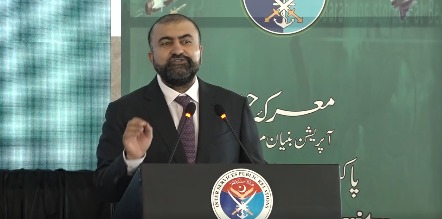
ISLAMABAD (Sapeher Times) Youm-e-Takbir’s theme, “The Great Determination, Invincible Pakistan—The Guarantor of Peace, Strong Pakistan,” highlights Pakistan’s nuclear program as a tool for deterrence and regional peace. These messages underscore national unity, defensive strength, and the pursuit of lasting peace on this significant day.
1-Reaffirmation of National Resolve: This theme pays tribute to the sincere resolve of Pakistan’s scientists, engineers, and military leadership that made Pakistan a nuclear power despite all international pressure.
Invincible Defense: The word “Invincible” makes it clear that no power in the world can now challenge Pakistan’s existence and security. It is a clear message to the enemies that any adventure against Pakistan will be disastrous.
 “Guarantor of Peace, Strong Pakistan” highlights Pakistan’s nuclear doctrine: deterrence, not aggression. Its nuclear capability is credited with maintaining peace and regional balance. The government’s information campaign, including national songs and documentaries, underscores this point and marks May 28, 1998, when Pakistan became a nuclear power after the Chagai tests.
The Government of Pakistan (Cabinet Division) has declared May 28 as an official public holiday across the country. The schedule of events is as follows:
Special seminars and conferences: Scientific debates on strategic stability are being organized by the Institute of Strategic Studies (ISSI) and related think tanks in Islamabad. Excitement in educational institutions: Flag hoisting, national song competitions, and celebrations are underway in all major universities of the country, including the Pakistan Institute of Engineering and Applied Sciences (PIEAS), to pay tribute to Pakistan’s nuclear scientists, including Dr. Abdul Qadeer Khan and Dr. Samar Mubarak Mand. Guard of Honour at Military Installations: Special ceremonies of laying wreaths and presenting a guard of honour at the Chaghi Monument, Islamabad, and other monuments are scheduled. The National Command Authority is the highest constitutional and administrative body of Pakistan, which is responsible for the command and control of all the country’s strategic assets (nuclear weapons and missile programs). It is considered one of the safest and most integrated nuclear command systems in the world. The National Command Authority of Pakistan is headed by a fully civilian and military leadership: Prime Minister of Pakistan Shahbaz Sharif is the head of this authority. Key members: Federal Ministers (Foreign, Defense, Interior, and Finance). Military Command and the three Service Chiefs of the Pakistan Army, Air Force, and Navy. Two primary wings work to implement the policies of the two most important sectors:
The Strategic Plans Division is the military wing whose Director General oversees the administrative and operational oversight of the entire network. Its job is to ensure the security of nuclear facilities, research, and the safe control of weapons.
Employment Control Committee: This committee decides how to implement the principles of strategic deterrence and the development of nuclear weapons. It is thanks to the NCA’s strict and foolproof command structure that all international organizations, including the International Atomic Energy Agency (IAEA), declare the security of Pakistan’s nuclear assets to be in line with international standards. Youm-e-Takbir: The importance of nuclear Pakistan in the context of the current crises in the Middle East…
In the context of the current crises in the Middle East, the nuclear status of Pakistan, the only nuclear power of the Muslim Ummah, gives it special diplomatic and strategic importance in the world in the present era.
Youm-e-Takbir (May 28) is that memorable day in the history of Pakistan when, by exploding in the Chagai mountains in 1998, Pakistan became the first nuclear power of the Muslim Ummah and the seventh nuclear power in the world.
In the context of the recent crises and ongoing conflicts in the Middle East (including the current tension between Iran, the United States, and Israel), Pakistan, which has nuclear capabilities, has assumed a very sensitive, unique, and indispensable strategic importance in the region. The nuclear and defense importance of Pakistan is evident from the following important aspects:
1. The Epicenter of Back-channel Diplomacy
Islamabad Talks: Pakistan has emerged as a neutral and credible mediator due to its nuclear status and strategic position. In the recent crisis, Pakistan played a key back-channel diplomatic role between the US and Iran and hosted peace talks in Islamabad.
Confidence in Nuclear Non-Proliferation: As a responsible nuclear state, world powers (including permanent members of the UN Security Council) attach key importance to Pakistan’s role in preventing nuclear proliferation in the Middle East and in negotiations regarding Iran’s nuclear program.
2. Military and Defense Pillar of the Muslim Ummah;
Security Partner of Gulf Countries: Pakistan is the only nuclear power in the Muslim world. Pakistan has deep defense ties with Saudi Arabia and other Gulf countries. During Middle East crises, the presence of Pakistan’s forces equipped with heavy combat capabilities there helps maintain a balance in the security structure of the Gulf.
Regional Vigilance: Pakistan has always condemned attacks on Gulf countries and their key installations and has acted as a military weight to prevent any major nuclear or conventional war in the region.
3. The New Quadrilateral Bloc (Egypt, Pakistan, Saudi Arabia, Turkey): A new security bloc of the four major powers of the region (Pakistan, Saudi Arabia, Egypt, and Turkey) is emerging against the rapidly changing situation in the Middle East and external attempts to forcefully change the maps. Pakistan is the only country in this bloc that has the capability of nuclear deterrence, which gives the entire alliance a strong defensive shield.
4. Protection of global energy routes (Strait of Hormuz) Geographical proximity: Pakistan shares a 900-kilometer border with Iran and is located very close to the ports of the Persian Gulf. Whenever the Strait of Hormuz is blocked or an oil supply crisis arises due to the Middle East conflict, the presence of the Pakistani Navy (Naval Strategic Command) in the Arabian Sea becomes indispensable to protect supply lines and maintain maritime security. All these facts prove that Pakistan is not just a spectator in the Middle East crisis, but is a major player in the region due to its nuclear power, balanced diplomacy, and geographical position, saving the region from a major catastrophe and maintaining the balance of power. In the current global and regional situation of the year 2026, Pakistan’s nuclear capability is not just a military honor, but has become the biggest guarantee of the country’s defense, sovereignty, and survival. Some of the most important aspects of the importance of nuclear power for Pakistan in the context of the current situation are as follows:
1. End of Conventional War and Strategic Balance
Breaking Indian Aggression: In recent years, India’s Hindutva leadership has intensified its aggressive rhetoric and hybrid warfare against Pakistan. Pakistan’s nuclear arsenal prevents India from launching any adventure or full-scale conventional war.
Credible Minimum Deterrence
Pakistan’s nuclear policy is aimed solely at defense, which has maintained the balance of power in the region, and this balance makes a major war between the two countries impossible.
2. New Cold War and Changing Global Alliances: Blocs of America, China, and Russia:
In the present era, the world is once again moving towards bloc politics (America and Europe versus China and Russia). Pakistan is an indispensable country for world powers due to its geo-strategic location and nuclear status in the region.
The only nuclear power of the Muslim Ummah: Pakistan’s nuclear status gives it a special diplomatic and strategic importance in the Islamic world, especially in the context of the current crises in the Middle East.
3. Economic & Energy Security: Promotion of nuclear energy: Pakistan is rapidly using its nuclear program for peaceful purposes to deal with the current economic and power crisis. The modern nuclear power plants at Chashma and Karachi (KANUPP) are providing the country with cheap and environmentally friendly energy.
Agricultural and medical benefits: Through nuclear technology, valuable work is being done in Pakistan for agriculture (production of modern seeds) and treatment of diseases like cancer (such as in Anmol and Namal hospitals).4. Internal Security and Shield Against Hybrid Warfare;
Pakistan is currently facing severe economic challenges and a new wave of terrorism. Even in such weak conditions, if external enemies shy away from directly attacking Pakistan, then the only reason for this is Pakistan’s nuclear power. It is the last and strongest line of our national security despite the political and economic crises of the country.
The historical background of the nuclear explosions carried out on May 28, 1998, in the Ras Koh mountain range of Chaghi district of Balochistan is a story of Pakistan’s survival, external pressure, and unparalleled scientific determination. The most important drivers behind these historic Chaghi explosions (Chaghi-I) are as follows:
1. Indian nuclear explosions and strategic crisis (May 1998) Pokhran-II explosions:
India suddenly carried out 5 nuclear explosions in the Pokhran area of Rajasthan on May 11 and 13, 1998, completely changing the balance of power in the region.
Threats from Indian leadership: Immediately after these blasts, the then Indian leadership (including LK Advani) started issuing aggressive threats to Pakistan and said that “Pakistan should accept the changing geographical situation”. Talks of attacking Azad Kashmir also started to be made public.
2. International pressure and Prime Minister Nawaz Sharif’s decision;
Financial incentives from the US: The then US President Bill Clinton called Pakistani Prime Minister Mian Nawaz Sharif and offered a financial package and aid of $5 billion in exchange for not carrying out the blasts.
Public and military pressure: The position of the Pakistani people, media, and the Pakistan Army was clear that the country’s sovereignty should be prioritized over external aid. Therefore, rejecting the dangers of all international diplomatic and economic sanctions, the Pakistani leadership gave the green signal for the blasts.
3. Why was Ras Koh (Chaghi) chosen?
Geographical and scientific reasons: The Ras Koh mountain range of Chagai was selected by Pakistan’s Strategic Plans Division and scientists in the 1970s.
Granite Mountains: The Ras Koh mountains are made of the hardest granite, which has the ability to block the most intense radiation and shocks released after a nuclear explosion within the earth, so that the surrounding population is safe.
4. May 28, 1998: That historic moment (3:16 PM) Team of scientists: A team of distinguished Pakistani scientists led by Dr. Abdul Qadeer Khan (KRL) and Dr. Samar Mubarak Mand (PAEC) had reached Chagai.
Color-changing mountain: As soon as the scientific team pressed the button at 3:16 PM, the white mountain of Chagai first turned yellow and then gray with the strong tremors of the earthquake.
Pakistan conducted 5 successful nuclear explosions in response to India’s 5 explosions.
Sixth explosion (May 30): Two days later, on May 30, 1998, Pakistan completed its series of experiments by conducting the sixth nuclear explosion (Chaghi-II) in the Kharan desert near Chaghi. These explosions at Chaghi forever ended the possibility of conventional war in South Asia, and Pakistan emerged on the world map as the first nuclear power of the Muslim Ummah and the seventh nuclear power in the world. 2. New Cold War and Changing Global Alliances: Blocs of America, China, and Russia:
In the present era, the world is once again moving towards bloc politics (America and Europe versus China and Russia). Pakistan is an indispensable country for world powers due to its geo-strategic location and nuclear status in the region.
 The only nuclear power of the Muslim Ummah: Pakistan’s nuclear status gives it a special diplomatic and strategic importance in the Islamic world, especially in the context of the current crises in the Middle East.
3. Economic & Energy Security: Promotion of nuclear energy: Pakistan is rapidly using its nuclear program for peaceful purposes to deal with the current economic and power crisis. The modern nuclear power plants at Chashma and Karachi (KANUPP) are providing the country with cheap and environmentally friendly energy.
Agricultural and medical benefits: Through nuclear technology, valuable work is being done in Pakistan for agriculture (production of modern seeds) and treatment of diseases like cancer (such as in Anmol and Namal hospitals). Pakistan’s military and scientific leadership had developed a very strict and foolproof strategy to keep the secret operation of the 1998 Chagai nuclear explosions hidden from the eyes of international spy agencies, especially the American CIA and the Indian RAW. The code names of this top-secret mission, the secret contacts of scientists, and the international sanctions are as follows:
1. Security Code Names of the OperationChagai-I: This was the main official code name for the first 5 simultaneous explosions carried out at Ras Koh on May 28, 1998,Chagai-II
This was the code name for the sixth and final nuclear explosion carried out in the Kharan desert on May 30, 1998. The Unlabeled Cargo: PAF C-130 aircraft were used to transport the nuclear devices from Rawalpindi to Chagai. The entire cargo was simply named “medical supplies and general equipment” in security documents to deceive international satellites.
The name of the tunnel inside the mountain: The one-kilometer-long tunnel inside the mountain of Chaghi was given the secret name “Site-X” in scientific documents so that no one would know the actual location.
2. Communication Secrets Before the explosions, communication between scientists of the Pakistan Atomic Energy Commission (PAEC) and KRL was kept completely secret: Telephone and Internet Ban:
Any scientist or engineer present at the Chaghi site was strictly prohibited from using regular telephones, satellite phones, or the Internet. All external communications were completely cut off so that no signals could be traced by foreign satellites.
Secret Military Couriers: Instead of any electronic means, special couriers of the Pakistan Army were used to convey sensitive messages, maps, and calculations between scientists, who manually carried written messages in sealed bags from one place to another.
The wireless code of the final signal: On the afternoon of May 28, when all preparations were complete, a specific high-frequency encrypted wireless frequency was used to send the final signal from the firing control room to the tunnel, which was turned on only 5 minutes before the explosion button was pressed.
3. International Sanctions After the Blasts
(International Sanctions) As soon as Pakistan announced the blasts, the United States and its allies imposed the strictest economic and military sanctions to economically cripple Pakistan:
US Glenn Amendment: US President Bill Clinton imposed immediate sanctions on Pakistan under this law, as a result of which all US aid to Pakistan was suspended.
Block on international loans: Under pressure from the United States, Japan, and European countries, the World Bank and the IMF stopped all new development loans and funds for Pakistan.
Ban on the supply of defense equipment:
A complete ban was imposed on the sale of military equipment, weapons, and spare parts to Pakistan, which affected the defense supply line of the Pakistan Army.
Response of the Pakistani economy
(Foreign Currency Accounts)As a result of these sanctions, Pakistan faced a severe economic crisis. The Pakistani government immediately froze all foreign currency accounts in the country to stop the outflow of dollars.
Help from friendly countries: In this difficult time, the brotherly Islamic country Saudi Arabia announced to provide 50,000 barrels of free oil on a daily basis to support Pakistan’s economy, which saved Pakistan from default. Despite all these severe international economic sanctions, the Pakistani nation and leadership endured this pressure for the sake of national defense, and ultimately, after 2001, the United States had to lift all these sanctions on its own.
The global sanctions imposed after the 1998 Chagai blasts had shaken Pakistan’s stock market and political landscape. The details of the economic crisis and political upheaval of this period are as follows:
Impact on the stock market: The announcement of nuclear explosions and the fear of suspension of foreign aid created severe uncertainty in Pakistan’s capital market.
Market crash and index decline: Immediately after the explosions, the Karachi Stock Exchange suffered a severe downturn. The index, which was around 1500 points before the explosions, fell to less than 700 points in a few weeks. It was one of the worst crashes in the history of the market.
Investor flight: Foreign investors started withdrawing their capital from the market rapidly, which led to a severe liquidity crisis in the market.
To prevent the outflow of dollars, the government froze the country’s foreign currency accounts worth $11 billion, which eroded the confidence of the business community and overseas Pakistanis in the banking system, and the stock market fell further.
Rupee depreciation: The Pakistani rupee became cheaper against the dollar at a record low in the open market, which severely affected the import-dependent manufacturing industry.
Political conditions at the time While the nuclear explosions gave the Nawaz Sharif government immense popularity at the public level, they also posed severe challenges on the internal and external political fronts: Imposition of emergency in the country: Immediately after the explosions, on the evening of May 28, 1998, the government imposed a state of emergency (state of alarm) across the country and suspended the fundamental rights of citizens.