ISLAMABAD (Sapeher Times) Gulf War, Rising Oil Prices, and a People-Friendly Decision by the Prime Minister of Pakistan

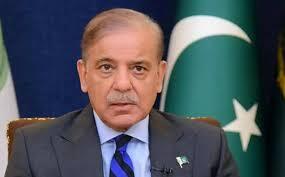
ISLAMABAD (Sapeher Times) In the joyous moments of Eid, Prime Minister Shehbaz Sharif rejected the proposal to further increase the prices of petroleum products, citing the Gulf War, and announced that there would be no price increase. As a result of the ongoing tension in the Gulf region and the attacks on Iran, crude oil prices in the global market have reached $ 158 per barrel. In the context of this global crisis, Prime Minister of Pakistan Shehbaz Sharif has taken the following important decisions to provide relief to the people:
The Prime Minister rejected the recommendations to increase the prices of petroleum products from Rs 76 to Rs 177 per liter on March 21, 2026.
Government subsidy: The federal government will bear the additional burden of Rs 45 billion for one week to maintain the prices of petrol and diesel.
Current prices (unchanged): Petrol price has been maintained at Rs 321.17 and diesel price at Rs 335.86 per liter.
Eid-ul-Fitr gift: The Prime Minister clarified that this decision has been taken to protect the people from further economic pressure on the occasion of Eid.
Strict austerity drive: To deal with the increase in the oil import bill, the government has imposed a 50% cut in petrol consumption at the official level and a ban on unnecessary expenditure.
Prime Minister Shehbaz Sharif has directed the relevant institutions to ensure an uninterrupted supply of oil across the country and take strict action against hoarders so that the global crisis does not directly affect the common man.
Prime Minister Shehbaz Sharif, while congratulating the people on Eid-ul-Fitr in his address to the nation, said that Eid teaches a lesson of national solidarity and collective responsibility, and happiness is complete when it is shared with others.
The Prime Minister said that the world is currently going through an extraordinary test, and the ongoing war in the region has affected the global economy and peace and stability. Attacks on energy facilities of brotherly countries have further complicated the situation, and there are fears that the crisis may intensify.
The Prime Minister said that Gulf oil prices are rising rapidly in the global market, and the oil that was $72 per barrel a few weeks ago has now reached $158 per barrel, due to which inflation is increasing. In early March, the price of petrol was increased by Rs55 per liter, which put a burden on the people; however, the government has rejected the proposal for further increase.
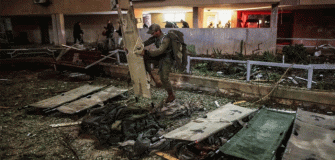
Shahbaz Sharif said that he was given a proposal to increase petrol by Rs50 and diesel by Rs74 per liter, but he did not approve it, because in such circumstances, the increase in prices severely affects the life of the common man. According to the Prime Minister, the government is trying not to burden the people further despite the current economic and global situation and to provide as much relief as possible. Similarly, warning of the possibility of a further increase in international oil prices in the coming days, Federal Minister for Information and Broadcasting Attaullah Tarar has stressed the need for a joint effort at the national level to save fuel. The Information Minister said that since the beginning of the US-Israel-Iran war, the possibility of an increase in the price of petrol by Rs 150 and diesel by Rs 250 has been averted; however, this situation cannot continue for long. Attaullah Tarar appealed to the public on behalf of the government to play an active role in saving fuel in view of the current global situation. In addition, Petroleum Minister Ali Pervez Malik asked citizens to fully implement austerity measures, such as avoiding unnecessary travel, promoting car pooling, working from home, and adopting e-learning in educational institutions. Saving these resources will make it easier to manage fuel imports and will help the government allocate funds to support the poor. Oil refineries have been instructed to continue purchasing oil, whatever the price, so that there is no disruption in supply in Pakistan. Ali Pervaiz Malik also highlighted the efforts of Prime Minister Shehbaz Sharif and Chief of Defence Staff Field Marshal Syed Asif Munir, who ensured oil supply from Saudi Arabia and the United Arab Emirates.
Attaullah Tarar said that due to the government’s proactive measures, the country currently has adequate oil reserves; however, the public should still refrain from unnecessary fuel consumption. He pointed out that global fuel prices have reached $158 per barrel, and the government is making every effort to save the public from the financial burden of rising prices. “Where the rise in global oil prices has affected Pakistan, the government has saved the public from a second consecutive price hike,” he said. To manage the energy crisis and safeguard foreign exchange, the minister said the government itself has also taken some austerity measures, including parking 60 percent of government vehicles on the ground to reduce fuel consumption. “A 50 percent reduction in petrol consumption has been made mandatory in all government departments,” to preserve existing petrol reserves and save precious foreign exchange. Information Minister Attaullah Tarar urged citizens to avoid unnecessary travel and adopt austerity, and clarified that the government is setting an example itself through tough domestic cuts. Four ships, loaded with gasoline, crude oil, and liquefied petroleum gas (LPG), arrived at Karachi ports, providing vital support to the country’s energy supply as the Gulf region faces rapidly escalating tensions. The arrival comes at a critical juncture, when the conflict in the Gulf, which analysts are calling an “energy war,” between Iran and Gulf states, including a series of attacks on energy facilities in Iran, Qatar, the United Arab Emirates, Saudi Arabia, and Kuwait, has raised concerns about the security and continuity of global fuel supplies. Despite the volatile situation in the region, Pakistani port authorities have confirmed the safe arrival of all four ships, reflecting the country’s ability to secure energy imports despite the current tensions.Meanwhile, significant progress has been made on the global diplomatic front, with the G7 countries demanding that Iran immediately and unconditionally halt all attacks. On the other hand, Iran has responded to the US and Israeli attacks by targeting Gulf countries, energy infrastructure, and shipping passing through the Strait of Hormuz, which has disrupted and suspended oil shipments and sent a wave of concern across the global market. It should be noted that Iran has targeted the southern Israeli city of Dimona with missile attacks, injuring 51 people. Iran has targeted 10 locations in central Israel with missiles in Operation Promised Sadiq. An Iranian ballistic missile attack in the southern Israeli city of Dimona destroyed a building and injured 20 Israelis. The attack is part of a new missile operation by Iran. Officials say that Iran has attacked with cluster warhead missiles. About 20 people have been injured as a result of an Iranian ballistic missile attack in the southern Israeli city of Dimona. A video of an Iranian ballistic missile attack in Dimona has also surfaced, in which the missile can be clearly seen falling on the city. According to reports, a building collapsed after the missile hit, after which rescue teams immediately reached the scene and started rescue operations. On the other hand, at the same time, emergency sirens sounded once again in the city and nearby areas, and people were seen running in fear in the streets. According to the report, a joint statement issued by the foreign ministers of the G7 countries, consisting of Canada, France, Germany, Italy, Japan, the United Kingdom, and the United States, strongly condemned the attacks carried out by Iran and its allied groups. The statement said that these attacks are unjustified and have become a serious threat to the peace and stability of the region. In their statement, the foreign ministers also expressed their determination that the G7 countries will continue to fully support their regional partners. He said that targeting civilian populations and critical energy infrastructure is a highly irresponsible act, which could have repercussions not only regionally but also globally. The statement added that the G7 countries are ready to take all possible measures to maintain and support global energy supplies, so that any potential crisis can be dealt with.On the other hand, Russian President Vladimir Putin, while congratulating the Iranian leadership on Nowruz, has announced Iran’s unconditional support and said that Russia is Tehran’s reliable friend and partner in difficult times and will stand by Iran in every difficult moment. According to the British news agency, Russian President Vladimir Putin sent a congratulatory message to Iran’s Supreme Leader Ayatollah Mojtaba Khamenei and President Massoud Peshkeshian on the occasion of the Iranian New Year Nowruz and said that Russia is with Iran. Russian President Putin, while expressing his best wishes to the Iranian people, emphasized that Russia is Iran’s loyal friend and reliable partner in difficult times. It should be noted that the Russian President’s announcement of support for Iran has come at a time when the US and Israel are continuing their attacks on Iran, while more than 1,400 Iranian citizens, including 204 children, have been martyred in the US and Israeli attacks so far. On the other hand, in the context of the current crisis facing Iran, some Iranian sources say that practical cooperation from Moscow has been limited, which is being questioned. Russia maintains that the attacks by the United States and Israel have plunged the Middle East into a serious crisis and have also resulted in a global energy crisis. The Russian president condemned the assassination of the Iranian leadership, calling it a “heartless act.” Meanwhile, a report in an American magazine claimed that Moscow had suggested to Washington that if the United States stopped providing intelligence to Ukraine, Russia could stop sharing information with Iran. However, the United States rejected this proposal, while the Kremlin has called the report baseless. It should be remembered that Russia and Iran have a strategic partnership, but it does not include any mutual defense clause, and Russia has repeatedly said that it is not in favor of Iran acquiring nuclear weapons because it risks starting an arms race in the region. On March 22, 2026, US President Donald Trump said that the ongoing war with Iran could end very soon. He said this during a media interview after a telephone conversation with Russian President Vladimir Putin. The US president had said that the war with Iran could end soon. When asked if the war could end in a few days or weeks, his answer was, ‘I think it could end soon, very soon. He said that Russia wants to help end the war with Iran. I have told them that you can help more by ending the Ukraine war, but they want to play a constructive role in this matter. On the other hand, according to the news agency, Russian President’s advisor Yuri Ushakov said that in a telephone conversation with President Trump, Russian President Vladimir Putin presented various proposals for an early political and diplomatic resolution of the Iran conflict. President Putin, referring to recent contacts with the leaders of the Gulf countries, the President of Iran, and other world leaders, said that the purpose of these contacts was to find a diplomatic path for an early end to the Iran war. The leaders also discussed the Ukraine war. President Trump said that the Ukraine war should end soon and that a long-term political solution to this conflict should be found. According to the Kremlin, the two leaders also discussed the situation in Venezuela in the context of the global oil market. Iran’s Deputy Foreign Minister also said in a statement that several countries, including China, Russia, and France, have contacted Tehran regarding a ceasefire, but he made it clear that the first and basic condition for any ceasefire is that aggression against it should not be repeated. Iran said that several countries, including China, Russia, and France, have contacted Tehran regarding a ceasefire, but Iran made it clear that the first and basic condition for any ceasefire is that aggression against it should not be repeated. Iranian Deputy Foreign Minister Kazem Gharibabadi said that several countries have contacted Iran to discuss a possible ceasefire. According to the Iranian news agency, Kazem Gharibabadi said that many other countries, including China, Russia, and France, are among the countries that have contacted them in this regard. The first and basic condition for a ceasefire from Iran is that aggression against Iran should not be repeated. It should be noted that Israel and the United States jointly attacked Iran on February 28. Since then, tensions in the Middle East have intensified, and their effects are now being seen on global markets. According to Iranian officials, at least 1,255 people have been killed in US and Israeli attacks so far, including 200 children. US President Donald Trump has given Iran a 48-hour ultimatum on the situation in the Strait of Hormuz, warning that the US will take strong action if the important passage is not opened immediately. The US President had said on the social media account Truth Social that the Strait of Hormuz is very important for global trade and its closure will not be tolerated under any circumstances. He threatened that if Iran does not comply with the demands, Iran’s major power plant will be targeted first. President Trump, reacting to the report published in a US newspaper, further claimed that the US has wiped Iran off the map. He said in a statement released on the social media platform Truth that the US had achieved its goals in Iran several weeks ago.According to the US President, the Iranian leadership is gone, while Iran’s navy and air force have also been destroyed. Iran now has nothing left to defend itself and wants to make a deal; however, it made it clear that it does not want any deal at this time. At the same time, Iran’s response to the US President’s threats was also revealed. Iran said that if Trump did so, US energy infrastructure in the Middle East would be targeted. Iran had said that if Trump damaged Iran’s power plant, it would attack US installations in the Middle East. After President Donald Trump’s statement that the Iran war may end soon, oil prices in the global market recorded a significant decline. According to the media, the price of Brent crude fell by 4.2% to $ 94.79 per barrel, while US crude oil (WTI) was seen trading at $ 90.96 per barrel after a 4% decrease. Both were down about 11 percent in early trading. Oil prices hit record highs on Monday, rising above $100 a barrel. However, after a telephone conversation between Russian President Vladimir Putin and Trump, market concerns eased, and prices fell significantly. There have also been reports that the United States is considering easing oil sanctions on Russia and releasing emergency oil reserves to help control rising prices in the global market. According to analysts, oil prices may continue to fluctuate sharply in the coming days due to the current situation. After talking to the Russian president, President Trump said that the United States may ease oil-related sanctions on some countries to reduce oil shortages. Earlier, the US president had said that if Iran tried to block the passage of oil tankers in the Strait of Hormuz, the United States would attack Iran 20 times more severely.Iran’s Revolutionary Guard Corps (IRGC) claimed to have successfully shot down an Israeli F-16 fighter jet in central Iranian airspace, while the Israeli military denied damaging the aircraft. The IRGC said in a statement that an Israeli F-16 Fighting Falcon was shot down in central Iran at 3:45 a.m. local time on Friday. The aircraft was destroyed by the IRGC’s advanced air defense system. It was the third Israeli American-made F-16 aircraft to be shot down by Iranian air defense units. According to Iranian officials, more than 200 enemy air targets have been hit in the first three weeks of the war, including drones, cruise missiles, refueling aircraft, and advanced fighter jets. The Revolutionary Guards said that these successful operations are proof that the air surveillance and defense capabilities of the Iranian armed forces have significantly increased, and the country’s defense system is now capable of effectively countering aggression not only in its own airspace but also in the region. On the other hand, the Israeli military confirmed that one of its fighter jets was hit by an air defense system during an operation in Iranian airspace, but the pilot realized the danger in time, due to which the plane was not damaged and it successfully completed the intended target. According to Iranian media, the plane was severely damaged by the missile, but it was able to exit Iranian airspace, and there is no definitive information about the condition of the plane or the pilot. In addition, the Iranian military said that the US and Israel are disappointed that they are unable to respond to Iran’s powerful attacks, the US and Israel are deliberately targeting private boats and passenger ships in the Gulf, and if they repeat the cowardly attacks, the US and Israel will face severe retaliation. It should be noted that the Bloomberg report stated that 16 US warplanes have been destroyed so far in the Iran-Iran war, including 10 Reaper strike drones. The report stated that a KC-135 tanker plane was destroyed during a refueling operation and its 6-member crew was also killed; in addition, 5 more KC-135 refueling planes were targeted by Iranian missiles at the Saudi Arabian airport, which caused considerable damage. It should be remembered that on February 28 last month, Israel and the United States carried out joint attacks on Tehran and other Iranian cities, in which top Iranian officials, including the Supreme Leader, senior military commanders, and civilians, were killed. In response, Iran launched a wave of missile and drone attacks targeting American bases and assets in Israel and the Middle East. This incident is part of the ongoing military tension in the Middle East and the increasing air clashes between Iran and Israel.