ISLAMABAD (Sapeher Times) LUMS Energy Institute Highlights Research-Driven Solutions to Pakistan’s Energy Crisis at Media Roundtable

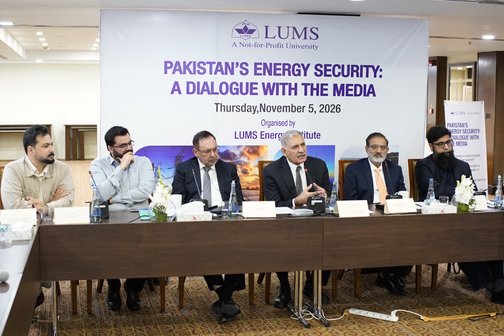
ISLAMABAD, November 5 (Sapeher Times): LUMS Energy Institute (LEI) convened its second high-level media dialogue in Islamabad, presenting evidence-based research findings on how Pakistan could achieve substantial economic savings, improve electricity affordability and strengthen long-term energy security through integrated system planning, energy efficiency, renewable energy integration and indigenous manufacturing.
Titled ‘Pakistan’s Energy Security: A Dialogue with the Media’, the session brought together senior journalists, power-sector leadership and energy experts to examine the root causes of Pakistan’s energy challenges and practical pathways towards an affordable, resilient and self-reliant energy future. Building on LEI’s first media engagement in May 2026, discussions focused on structural planning challenges, seasonal electricity demand, imported-fuel dependence, distributed solar penetration, grid flexibility and financial sustainability.
Dr. Fiaz Ahmad Chaudhry, Senior Advisor at LEI, Chairman of the Board of Directors of National Grid – Pakistan, and Independent Director of the Independent System and Market Operator (ISMO), highlighted the role of the LUMS Energy Institute in identifying critical sectoral gaps through evidence-based research and providing technical support to public-sector institutions for informed policy making and integrated system planning. He cited LEI’s contributions to Electricity Outlook 2020 and 2022, demand forecasting tools, Grid Code 2023, Energy Conservation Building Code 2023, Electric Vehicle policy framework, Sustainable Architecture and energy sector indigenization initiatives as examples of research providing practical solutions and sectoral reforms.
During the technical session, Real Root Causes of the Energy Crisis: Data-Driven Research, Dr. Chaudhry presented findings highlighting approximately US$17 billion in projected savings associated with revised least-cost generation planning under IGCEP 2025–2035. LEI’s research further indicated that improving energy efficiency in just 25% of residential buildings could reduce peak electricity demand by approximately 3,000 MW and yield potential annual energy-cost savings of PKR 442.6 billion.
Presenting findings from LEI’s study, The Net Zero Transition: A Pathway to Clean and Sustainable Electricity by 2040, experts highlighted a modelled pathway to near-complete power-sector decarbonization, reducing fossil-fuel generation from 49% in FY2024 to approximately 1% by FY2040, with hydropower contributing 47%, wind 25%, nuclear 18% and solar 8%. The study projected approximately 78 million tons of avoided carbon emissions and indicated that growing distributed solar could reduce minimum grid demand to nearly 3,000 MW, requiring greater grid flexibility, battery storage and demand-side management.
LEI’s research on Thermal Power Plant Repurposing also identified grid-stability challenges under high renewable energy penetration, proposing the potential conversion of suitable existing thermal generators into synchronous condensers to provide essential grid-support services, subject to technical and economic feasibility.
LEI experts presented findings from the Institute’s power-sector indigenization assessment, identifying approximately PKR 1.1 trillion in potential indigenization opportunities against PKR 1.9 trillion in projected equipment demand across Pakistan’s transmission and distribution sectors. The assessment highlighted substantial localization potential, evaluated the manufacturing readiness of approximately 49 local manufacturers, and outlined a proposed structure for indigenization roadmap. LEI urged designated government entities to expedite the long-delayed Power Sector Indigenization Plan (PSIP), envisaged under the National Electricity Plan 2023–2027, to strengthen domestic manufacturing and reduce import dependence.
The research also highlighted emerging battery manufacturing opportunities, with Pakistan’s battery demand projected to increase from approximately 4–5 GWh in 2025–26 to 45–50 GWh by 2031, strengthening the case for indigenous battery manufacturing and supply-chain development.
A panel discussion, Ask the Experts: Institutional and Expert Response, featured Dr. Masood Ahmad, CEO, ISMO; Altaf Hussain Malik, Managing Director, National Grid Pakistan; Omer Haroon, Executive Director, ISMO; and LEI technical experts, Umar Farooq and Faisal Javaid Mughal. The panel addressed media questions on power-sector reforms, investment priorities, renewable energy integration, grid modernization and long-term energy security.
The dialogue emphasized the media’s role in bridging information gaps, improving public understanding of complex energy challenges and promoting informed, evidence-based discussions on Pakistan’s energy transition.